Showing posts with label Pornology. Show all posts

2015/10/19

View From The Couch - 19/Oct/2015

What Kind Of Man Reads Playboy?

Sometime last week, it made the news that Playboy magazine was no longer going to feature nude models. A thousand smart alec remarks would have been launched to such news. Instead, the women will be scantily clad, unprovocative poses, but not nude. In a day and age where Australia's leading lad mag 'Zoo' was forced to close shop, it seems rather retrograde that Playboy retreats to a position of further modesty, but perhaps on another level, subtlety is the new 'adult' thing.
At a time when every teenage boy has an internet connected phone and the web is rife with pornography, the magazine has opted to continue featuring women in provocative poses, just not completely nude, the Times said. 
"You're now one click away from every sex act imaginable for free," Flanders was quoted as saying in the Times. "And so it's just passe at this juncture." 
The magazine that featured Marilyn Monroe on its debut cover in 1953 is making the changes after circulation dropped from 5.6 million in 1975 to about 800,000 now, the Times said.
That is a relatively slow decline compared to some other magazines. Playboy always elicited strange responses from guys I knew. They would dismiss it as too tame (and therefore lame) next to the more explicit Penthouse magazine, and in the next breath denounce it as all sexist bullshit. Playboy's awkwardness probably lay in its decidedly middle-brow posture which gave it away as somewhat an illegitimate contributor to the public sphere of ideas. It's a quality it shares with Rolling Stone, but of course Rolling Stone magazine gets extra credit from people for dealing with popular music and not naked women. One can't help but think it's a kind prudery because Playboy was no less progressive than Rolling Stone ever was when it came to social mores. 

If you think about 1950s America before Alfred Kinsey threw open his Kinsey Report, there probably wasn't any forum or framework for the discussion of sex and the pleasures of carnality. It might seem quaint today but Playboy probably lifted the blinds on the collective bedrooms of the mind. As a society we've come a long way since those days to the point where any teenager can click on the internet and find the most explicit porn to their choosing. It sure didn't turn out this without Playboy magazine along the way. 

Try this article for the impact of Playboy on the public consciousness:
The November 1972 issue of Playboy magazine is the magazine’s best selling issue of all time. This is not because of the articles, but due to the proliferation of one iconic image from the magazine: that of centrefold model Lena Söderberg. 
The original image was digitised by researches at the University of Southern California Signal and Image Processing Institute (SIPI) in 1973. Alexander Sawchuk, the assistant professor of electrical engineering, his graduate student and the SIPI lab manager were frantically looking for a new image for a research paper. 
They had already exhausted the stock of usual test images. It was at this moment — according to legend — that a colleague walked in with the November 1972 issue of Playboy. Seeing the predicament that the researches were in, he tore a 5.12-inch strip from the top of the centrefold and fed it to their scanner. As it had a resolution of 100 lines per inch, the resulting image was the perfectly cropped head and shoulders image 512 x 512 pixels in size. 
This image has since been used widely in imaging processing circles. That’s because the nature of the image makes it amenable for testing a wide range of image processing algorithms.
Here's an article that gives you a better digest of Playboy than I can. 
Playboy was always exceptionally decent. Hugh Hefner was helped by a start-up loan from his mother, not Satan. And Playboy had an impeccable record of literary publishing. Ray Bradbury's epochal Fahrenheit 451 was serialised in 1954 and the magazine hosted Vladimir Nabokov, Norman Mailer, Saul Bellow, P.G. Wodehouse, Kurt Vonnegut, Doris Lessing, John Le Carre and John Updike - not at all a shabby list. Presumably, they did not think of themselves as slumming it.

Photographers at work on Playboy included Helmut Newton, Herb Ritts and Annie Leibovitz. The magazine interviewed major political figures, including Martin Luther King and President Carter. It was the latter who mournfully explained in 1976 that he had "committed adultery in my heart many times". I think he must have meant "head", because the big truth about erotica is that the real action takes place above the collar, not below the belt. Hence, Playboy's late decision to cover up its nudes does very little to defuse eroticism. In the contest between concealment and display, concealment is almost always more sexy: this is why classic Playboy nudes are actually so deliciously chaste.
That is an amazing list of names to have written and taken photos for Playboy. There is a Japanese edition of Playboy. It is remarkably similar in philosophy to its American source. They too hired some of the great writers and photographers to contribute and in most part it was more edifying than not. Nudes are nice, but the articles were the thing. Not that I've looked at any edition of Playboy since the 1980s so it's hard to say if the standard has been maintained. 

Sometime in the mid 1980s, Andy Summers and Robert Fripp teamed up to give us the album 'Bewitched'. On it is an epic instrumental track 'What Kind of Man Reads Playboy'. I always took it to be an ironic, subtle admission of their prurient interest in pictures of naked ladies. Today, I'm thinking they meant it was a very different kind of man to look past the naked ladies to actually read the amazing articles contained within. 
2013/03/12

'Middle Men'

Seedy Business Is Still Business

This thing cost me $8.99 at JB Hi-Fi and sat in my box of unwatched movies for like 3months thanks to Fetch TVs parade of offerings. By the time I got to it, I'd forgotten what it was supposed to be about. It's some kind of independently produced film with a US$20million budget that returned less than US$1million at the box office. I have to say sometimes that's where you find the interesting films.

If 'Boogie Nights' was a romanticised portrayal of the end of the porn industry based in film, then 'Middle Men' must be the picaresque celebration of internet porn. As usual, anything with Luke Wilson is surprising, but this film might take the cake for being a bigger surprise than 'Old School'. This is a pretty gripping, interesting film. I know the critics don't agree, but hey, that never stopped me endorsing a bit of movie.

I want to talk about this film a little bit, so here's the obligatory spoiler alert.

What's Good About It

This is a great cast doing some seriously amped, energetic stuff. Giovanni Ribisi does his unhinged person act which is pretty close to the unhinged act he had going in 'The Rum Diary', but you also have James Caan as a dodgy Vegas lawyer; Terry Crews as the trusty muscle; and cameo-like entries from Kelsey Grammer, Kevin Pollack and Robert Forster. It's like a character-actors-on-parade effort that keeps you entertained through the muddled switching and the bizarre twists of events.

The directing is reminiscent of Tony Scott's 1990s feel, which given the recent suicide of Tony Scott, makes you think about this kind of film making in a more nostalgic light. The shooting style is shot through with whip pans and tricky moves as well as long lenses and polarised filters. It's a beautiful looking piece of work.

What's Bad About It

At points, the idiotic duo of Buck and Wayne as played by Ribisi and Gabriel Macht get very annoying. If it were a Martin Scorsese film, these characters would've died in the second act. The longer they hang around, you feel like the film is just going to go off the rails at any moment.

The big flashback narrative style doesn't work as well as it should, and in some ways ruins the surprise and humanity of the abduction exchange. The moralising that creeps in towards the end of the film is also a bit sad, given the bravado of disdain the voice over possesses at the start of the film. The more the film runs towards the moralising, the less energy it seems to have.

What's Interesting About It

Surprisingly, there's quite a bit that is interesting with this film. James Caan's dodgy lawyer Haggerty mounts an argument as to why Luke Wilson's Jack can allow himself into being involved with people who deal in porn. He cites hotels that have porn channels in their rooms. "Are hotel owners pornographers?," is his rhetorical question. Why is this even interesting? It's interesting because the rhetoric posits that in a fully commodified society, at some point our transactions impinge on porn, even without us knowing or thinking about it. You check into a hotel, never use the pay-for-porn channel, but you know it's there. By staying in the room, you've actually validated the porn for which you never watched or paid - and you weren't even aware of it.

People draw lines all the time. I used to know a guy who loved saying that he may go so low as to do certain sexual acts, but he would "never be a purveyor of porn". Society draws the line in a way that suits itself - as Kelsey Grammer's District Attorney shows as he tries to use the porn business against Jack, only to have the tables turned on him quickly. The line society draws in the sand, trying to separate out porn and pornographer is shaped like their own hypocrisy.

All Business Is Seedy


The biggest bit of hypocrisy of course stems from Jack's steady denial that he's in porn. For this facade to work, Jack essentially abstracts out porn into a kind of service industry and his part in it as the billing service businessman. You can of course abstract any number of things until you don't recognise what is being discussed. This is possibly why, say sabermetrics gets such a bad rap from baseball scouts.

Still, overlooked in all this is the ability of money to simply blow away social meaning and contextualisation. If Jack can make 100million dollars simply billing on behalf of pornographers, the weight of the money lends a legitimacy and purpose and social meaning all of its own. What might be surprising is that the sex industry in general doesn't flex its muscle more than it does, by hiring lobbyists, especially given the potential to really effect the kinds of changes they want. At the same time, there is a certain level where illicit-ness of the sex makes for the price to be made higher.

The great irony of course is that America - where most things do get commodified and there fore abstracted into almost unrecognisable transformation - is busy trying to drive porn away from legitimacy precisely because the other institutions won't be able to handle a legitimated porn. It's bad enough that you can put a price on sexual pleasure. If a price is put on sexual pleasure, then how can there not be a price put on all transactions? And what separates any transaction from the kind of transaction that takes place with the 'consumption' of porn? These kinds of ugly questions are not that far way.

The Objectification Of Everything

The chief complaint of non-religious anti-porn people about the porn industry is that it is exploitative of women. This is true. But it would not be true if the symmetrical drawing power of women's sexuality were not so powerful over men. The feminist discourse runs that porn objectifies women. From what we can gather from the way markets move, it's not only women who get objectified, and it's not porn alone that does the objectifying. There are plenty of objects sold on fetish value an this is not marketed to men alone.

If this film is anything to go by, it is that desire in anybody runs at objectification in order to latch meaning. The transaction of meaning is bolstered by transaction of monies, and if the transaction involves pleasure - and sexual pleasure at that - then effectively everything that can be bought and sold - commodified - is ergo objectified.

The Issue Is Monkey, Not Pussy - Version 3

This film is pretty radical in the beginning, because the voice over posits that the raison d'tre of masculine gender is not to procreate through coitus, but masturbation. It's a heck of claim that zings past you in a montage, but it is radical all the same.

The film's opening contention is that men do not live for procreative sex, they live for pleasurable sex and at best this is masturbation. The formulation of the montage is such that it is clear that to the mind of the narrator, sex exists as a variant of masturbation and not the other way around. Fancy that. Sex with a woman is only an elaborate variant of wanking, is what the film is positing as an explanation why porn thrives so much.

It's a perverse theory that comes and goes through out history and Freud of course thinks that people who dabble in these thoughts are sick/demented, but from a relativist point of view, who can refute the contention conclusively? It's only absolutists who can say with certainty anything to do with sex and historically speaking they've been wrong more often than the relativists. The facts are, the porn market is a very strong market place. The film maker is saying this is why.

I only point this out because it was surprising to see it from a film that is ostensibly mainstream. The fact that it is ironic is not the point - America's changed quite a bit this last decade.

Guns Germs Steel Porn

One of the more farfetched ideas in the film is when the FBI use the porn accounting system to track terror targets. It's hard to say if something like this happened, but if it did one would have to conclude that the sum total of human experience is much smaller than we thought. The obscenity of the 'War on Terror' is dealt with in a manner that reminds us that maybe the military solution to take out terrorist cells is a kind of overkill At the same time, the notion that child pornography in particular is the unforgivable crimes seems really out of kilter with the way the 'War on Terror' is handled by the state. The cognitive dissonance shows us the gulf between values and hence American hypocrisy on many issues relating to guns, commerce and sex.

In a really sad way, what the terror targets have in common with the West is the masculinity defined by testosterone, and that leads to the need for porn. If the US government is using this as a backdoor into blowing them up with say, Drones, then we're really living in the Orwellian nightmare where the state has invaded your libido and set up an observation station.

Russian Mafia

There are a number of films that posit the Russian mafia as the bad guys. It's remarkable how similar they are from film to film. This might be due to an absence of imagination on the part of the filmmakers or it might be because the stock-standard Russian mafia is exactly the kind of brute that fits the villain-identikit for the movies. If you swapped out these Russian mafia dude from say, a 1990s Steven Seagal movie or 'Lethal Weapon 3' or 50cent's recent boring effort 'Freelancers', you simply wouldn't notice the difference. I guess the long and short of it is that they're here to stay for some time.

What I'm really waiting for is a kind of 'Godfather' movie, but set with the Russian Mafia operating in the west. It may actually turn out to be a real winner. In any case, the film persists with the stereotype Russian mafia dudes in black and all the brutal business that goes with it. It's interesting that there's no evolution with this subset of movie villains, when even vampires can become the object of lust.

That being said, it's interesting how the FBI agent says Jack is okay because he assisted the US government in stopping terrorists and in the balance the FBI is quite happy to let slide an accessory-to-murder charge on account of his patriotic contribution and the fact the victim was a Russian gangster. Talk about getting away with murder.

2009/04/30

Marilyn Chambers Obituaries

Rewriting Pornology


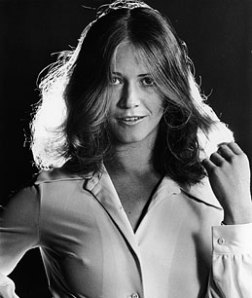
When I was a kid, Marilyn Chambers wasn't just the name of a porn actress, she was some kind of transgressing entity that somehow threatened polite civilization. I didn't understand porn yet, but in NYC, all the tweenie kids knew her name in the local park playing ball. It was the name of a woman who seemed to be a cipher for the breakdown of walls in the 1970s. Everything was possible, and her name was part of that social force. And none of us had seen a single frame of her porno movies.

Time Magazine had an obituary/tribute column a fortnight ago when she died.
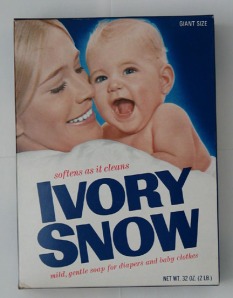
marilyn-chambers-1972People in the '70s knew two things about Marilyn Chambers: she had appeared as a model on an Ivory Snow box, fondly holding an infant under the corporate slogan "99 and 44/100% Pure"; and she starred in Behind the Green Door, one of the first, weirdest and most popular hard-core movies in that brief period of the '70s known as "porno chic." These two factettes, with their colliding irony, made the blond, willowy Chambers the pinup princess of XXX cinema, a notoriety she parlayed into a career in soft- and hard-core sex films that lasted from 1972 until ... yesterday.
The sad news is that Chambers, to quote the title from a 1974 movie she did not appear in, is 99 and 44/100% dead. The actress was discovered last night in her mobile home in Santa Clarita, near Los Angeles, by her teenage daughter McKenna Taylor, from the last of Chambers' three marriages. An autopsy will be performed; foul play is not suspected.

marilyn-ivory-snowChambers wasn't the first person to take the route from modeling and acting to hard-core, from commercials to pervertials. Eric Edwards, whose porn career spanned nearly four decades, had appeared in ads for Gillette razors and Close-Up toothpaste. But of all the shadow stars that emerged from the early porn sensation — Linda Lovelace and Harry Reems of Deep Throat, Georgina Spelvin of Devil in Miss Jones — Chambers was unusual in her Waspy good looks, her girl-next-door appeal and her use of her real name at a time when other actors resorted to jokey pseudonyms. If the Ivory Snow girl could go into porn unashamed, then maybe the genre wasn't so sooty. She was different, and smart, in another way: when co-directors Jim and Artie Mitchell asked Chambers to star in Green Door, she demanded $25,000 (an astronomical sum in the pinchpenny industry) and a percentage of the gross. And she got it.

It's pretty weird how the writing has the tone of somebody who grew up jerking off to her films. :) Anyway... It's also a little surprising to see the SMH run a belated Obit from the London Telegraph a good week later.
She was working as an exotic dancer in San Francisco when she saw a newspaper advertisement seeking actresses for what was described as a "major" film. Only when she filled out the application form did she realise it was pornographic. The producers offered her the starring role.

Shot on a shoestring budget, Behind The Green Door became one of the biggest adult film hits of the 1970s, thanks to its unexpected publicity boost when a photograph from Chambers's modelling career appeared on boxes of a popular brand of detergent, Ivory Snow.

Chambers went on to be ranked by Playboy magazine as one of the top 100 sex stars of the 20th century and was named among the top 10 adult film stars of all time.

"The adult films have been a total pleasure," she once said. "They were like getting paid to live out my greatest fantasies. The rest of the stuff … sometimes got to be a real grind."

Chambers, who was found dead on April 12, was married and divorced three times. One of her husbands, Chuck Traynor, had once been married to porn actress Linda Lovelace. A daughter survives her.

A bit more somber in its tone there.

The 1970s really were weird, and for a moment in history it looked like the sexual revolution was going to overcome all mores. This is from Time Mag back in 1974:
Farewell, Deep Throat? So long, Miss Jones'? Could it be that the lust affair is over? Within the past year, two hard-core flicks (Deep Throat and The Devil in Miss Jones) were among the nation's top-grossing films and porno stars like Linda Lovelace (Throat) and Marilyn Chambers (Behind the Green Door) became nationally-known figures. Today, hard-core movie houses are half empty. "Business is only 60% of what it was last year," says Porno Producer David Friedman, president of the Adult Film Association.

The recent Supreme Court decisions toughened local prosecution of pornography, and the FBI now has 90 full-time agents monitoring interstate shipments of film. The real trouble, however, is neither cops nor courts but boredom—the intrinsic tedium in the medium since hard-core hit the screen. "A hard-core film today is as strictly constructed as a medieval morality play," Friedman complains. "There are just so many positions you can film."

There are approximately 730 hardcore theaters in the U.S., and about 1 million regular patrons. To make big money, porno films must lure larger audiences. But, says Friedman, "the millions who saw Deep Throat and Green Door have now seen a dirty picture. They belong to the one-time-only club."

Of course AIDS put an end to that happy prospect, but before the grim days of the 1980s, there was a period where you had 'cross-over films'. Films that were essentially (and fundamentally porn) that somehow garnered mainstream critical press and audiences.

And if it weren't for this willingness, kids wouldn't have come to know the names of people like Marilyn Chambers or Linda Lovelace. It's actually the sign of the times that the greatest whistleblower of the 1970s William Mark Felt Snr ended up with a codename from a porno flick - 'Deep Throat'.

In retrospect it seems unthinkable, but there were porn films with artistic aspirations and ambitions. The weirdness of this terrain got explored extensively in 'Boogie Nights' so I won't bother with the absurdity of that pretension, but Marilyn Chambers' career fits right into that arc where for a moment in history, even hardcore porn found mainstream success.

It would be unthinkable to go take a girl on a date and to watch a porno in the movie theatres, but heck, that's what happened with Marilyn Chambers' 1970s work (for want of a better word!).  The confusion of the times is tacitly documented in 'Taxi Driver' where Travis Bickle played by DeNiro takes Cybil Shepherd's white crust girl Betsy to the cinema where they are playing hardcore porn. She says she's uncomfortable but he insists it was recommended highly.

It's laughable today, but back in 1975, there was a lot of confusion about these things. There's a certain irony that Chambers got cast in her first porn movie for her resemblance to Cybil Shepherd, and for Cybil Shepherd to end up playing a character who is made uncomfortable by the social changes wrought by those films.

Yet, after all that, the biggest irony of them all might be the loving obituaries that Chambers got this month. In the end it seems, that moment in history when porn broke through to the mainstream mattered more than we thought, if only because she brought so much ...err... joy to so many blokes.

Blog Archive