2013/11/26

Where Were These People On Election Day?!

ALP's Early Comeback

Polls are an awful thing really, because they measure results of what people allegedly think when given thoughts they wouldn't ordinarily have by themselves on choices they didn't formulate. If somebody told you the options for managing emissions was a 'carbon tax', an Emissions Trading Scheme', 'Direct Action' and nothing at all, you would be led to thinking this was the be-all and end all of all solutions and answer something out of this bunch of bad choices. Not to mention the inherent hostility of the polled person who can then bag out the incumbent for their incumbency and berate the Opposition for their opposition and so on and so forth.

In that light, I can only shrug at the newest poll showing the ALP have surged ahead of the Coalition.


The graphic says it all - less than 3months since the fateful election, the current Government finds itself in a position it would lose the two-party preferred vote. It didn't take long, and it didn't take much for the dissatisfaction to set in. If these people had exercise a bit of forethought, they might have  avoided the Abbott government altogether. Doesn't it make you sick?

The truly interesting thing might be this bit here:
But in a blow to the Prime Minister's plans, more people like the supposedly ''toxic'' carbon tax than his proposed replacement policy.


An Age-Nielsen poll shows little support for Tony Abbott's proposed carbon tax replacement policy.


Just 12 per cent of voters believe Mr Abbott's ''direct action'' policy of using taxpayer funds to purchase emissions reductions from polluters, and planting trees, is the answer. That amounts to a virtual vote of no-confidence in direct action, which has support 4 percentage points lower than the 16 per cent in favour of keeping a fixed carbon price.

The Age-Nielsen poll of 1400 voters found that Australians overwhelmingly wanted to see Australia meet the nation's commitment to cut emissions by 5 per cent by 2020 based on year 2000 levels.

While both sides of politics have committed to the minimum target, the poll shows voters prefer the policy Labor took to the last election - a switch to an internationally linked emissions trading scheme.

Fully 29 per cent nominated an ETS as the preferred mechanism to combat global warming - well ahead of ''some other policy'' on 24 per cent and 11 per cent who favoured ''no policy at all''.

In other words, the only reason people want the Carbon Tax removed is so they can go to an ETS. That's right, the only tangible reason people want the Carbon Tax gone is because they want the ETS So much for that mandate Tony Abbott's been going on about. Listening to his coded dog-whistling you would have thought Australia's electorate wants to go the way of the Ostrich in any discussion on trying to mitigate Climate Change.

The Drum on ABC 24 featured some Liberal Party apparatchik last Friday who wanted to tell us that the future lie in adapting to climate change, and not mitigating it. If I were a man in possession of inclinations like Elvis Presley I would have shot my TV set. instead I screamed and turned it off. It's like some bad joke from the Easter Bloc of old that Tony Abbott got elected.

Delaying The Carbon Repeal

In another one of those election promises that is being broken by the Coalition, we have the Carbon Tax repeal. They've got it through the Lower House but there's enough resistance in the Senate to shoot down the repeal. The Coalition solution is  therefore to hold off taking it to the Senate until the new Senate sits in July.
The Abbott government has scheduled two weeks of sittings, two for the Senate and one for the House of Representatives.

Usually Parliament stops for the winter break at the end of June, returning for the spring session in mid-August.

In the last 15 years federal Parliament has only sat once during July - for a single week in 2011 - which lends weight to the theory that the Abbott government has deliberately arranged this voting period for the carbon tax repeal.

Leader of the House Christopher Pyne released a schedule of sitting dates on Monday, showing the Senate sitting for a fortnight from Monday, July 7.

Mr Pyne said more sittings provided an opportunity for debate and consideration of the important bills that will come before the Parliament in 2014.

The lower house will sit for a week from Monday, July 14.

It seems the Coalition has twigged to possibility they would lose a Double Dissolution election - which is to say they had no mandate at all like they have claimed. The fact that the new poll has blunted their resolve points to the inherently opportunistic, populist and largely spineless nature of this government. Have they no shame? It appears not. Have they no dignity? No. Clearly, that's why they need the Monarchy to drape them with some (imagined) dignity.

Christopher Pyne has been rather disruptive in other ways.
Mr Pyne told Sky News on Sunday evening that two of the states that had agreed to the Gonski reforms, Victoria and Tasmania, had never signed "final agreements" with the federal Labor government, and neither had the National Catholic Education Commission.

"That isn't a national model, and it's very difficult for us to implement the complicated, confused, very dense model that they came up with because of Labor's predilection for prescription and regulation," he said."We want less regulation, less prescription from Canberra, and that's what I'll set about trying to put in place when we can do that."

Opposition Leader Bill Shorten accused the Coalition of breaking the promise it made before the election that it was on a "unity ticket" with Labor on school funding.

"The weasel words of the government saying before an election they will look after schools and properly fund our children in the future, and ... they now dial forward and say all deals are off, there were no deals."

Well, Bill, the answer is that these people really will do and say anything to get into power, hold power and abuse power. No surprises whatsoever there.
2013/11/20

Breaking Bad, The Aussie Way

It's Only Been Two Months, Phoney Rabid!

I don't exactly know what you can chalk this up to, but Tony Abbott has managed to drive the delicate Australian diplomatic relationship with Indonesia into a ditch at full throttle. Who gave him the bloody keys? Oh we did. There are a few interesting things about this turn of events.

Tony Abbott essentially came to power believing that his election win validated all of his  tightly-held views. He is interpreting his election win as a massive endorsement of his various policy foibles. Considering he is the least popular Opposition leader to win a Federal election, it might behoove him to consider that he might have the least endorsement by the people as far as election winners go. In deliberately ignoring such nuances to the election result, he has tried turning back to boats to mixed results. he has not managed to buy a single boat (which is probably a good thing given how stupid is the very idea) and went to Jakarta to talk to the Indonesian leadership but ended up getting no sizable deal worthy of calling a deal.

In fact, if anything, the Indonesians have been pretty blunt in expressing their distrust of Tony Abbott, and have repeatedly contradicted Abbott, Julie Bishop and Scott Morrison at various points. The point - so to speak - is that Abbot has failed to score any exchange with the Indonesian government and by extension the Indonesian polity, and has expended what little good will we had with them all for the sake of the asylum seeker issue.

Compounding the issue has been this business of leaked documents by Edward Snowden which essentially fingered Australia as espionage aficionados of the South Pacific, and that our spy agencies had attempted to bug the phone calls of the Indonesian leadership. naturally, this has poured gasoline on to the fire that was already burning and so, Indonesia has resorted to calling its ambassador back. It's like they're playing a cheap replica of Cold War politics with us, with Australia as the potential enemy. If both sides  keep talking this way, it may end up being that way. You'd think wiser heads will prevail but unfortunately the outgoing Susilo Yudhoyono Bambang is a lame duck going into the election next year, and wisdom and the current Coalition government are like matter and anti-matter. They just don't seem to coexist.

The shocking thing about all this is that the negotiations with Indonesia was the first real diplomatic challenge for the incoming Abbott government and not only have they failed to do a good job, they've sort of set it alight as a monument to their failure. If the relationship is going to take years to repair, well, we can point at Tony Abbott for decades to come as the idiot who flushed the relationship down the drain. It's rather ironic given that these guys came in promising to be steady and sure handed.

The Peter Hartcher Post-Mortem

Peter Hartcher is writing his elaborate account of how the ALP blew itself up over 5 episodes. As of this writing, it's up to episode 4. It's the same old story with not many new information, but it does offer some tidbits. I'm not sure the union movement comes across as being a positive influence in the events and Paul Howes is definitely answerable for how things turned out the way it did. The bit about Kevin Rudd being like paralysed after climate talks in Copenhagen fell apart is revealing. In fact it says in passing that Mark Arbib wasn't the same after Copenhagen. When you consider how much our commitment was riding on an agreement at Copenhagen, you ca understand the policy paralysis. There are no good ways to sell an ETS without that agreement in Copenhagen. There was no alternative path, no other option; which explains why Gillard and Swan opted to just postpone it for expediency.

The other revealing thing about the Rudd coup is that Gillard did have ambitions for the top job and essentially jumped the gun. She has been putting out a narrative that she hadn't made up her mind until that day and it was Bill Shorten and others who conscripted her into the top job - to which I only have the playground retort "as if!" It is very obvious that dating back to 2006 when the two of them deposed Kim Beazley, that the partnership was out of expedience and that deep down she had contempt for Kevin Rudd. Now, that's fine except that she can't very well go around telling the world how treacherous Kevin Rudd was when she pretty much did to him what ended up being done to her. The outrage really is a bit rich.

Now that the historic moment has passed and Kevin Rudd too has declared he's leaving Parliament, I have to confess I'm quite glad it's over. I did warm to Kevin Rudd in the end but only because his replacement drove me to that appreciation.

The problem of Julia Gillard as Prime Minster was compounded by the fact that she was exactly the kind of person who combats rhetoric with rhetoric and therefore hypocrisy with hypocrisy. Even her much-lauded "Misogyny Speech" comes with the caveat that she said that in response to Tony Abbott questioning Peter Slipper's character when everybody knew that Slipper was a Liberal at heart as well as the linchpin holding together the slightest of margins for Julia Gillard. Maybe they teach this stuff as a virtue in law school, but the more you look at context, the more the "misogyny speech" loses its power; and it happens because even in her angriest rhetorical flourish, Julia Gillard was the kind of hypocrite who would take Slipper as speaker to shore up her numbers.

And there's *nothing* wrong with that in my humble opinion, but I just want to be spared this notion that a great injustice was righted by that speech. If you believe that, then you probably believe that a pumpkin patch doll is a radical new form of soft sculpture. It was possibly her biggest nonsequitur moment as Prime Minister.

Which is to say, this was the worst aspect of the Rudd-Gillard ALP government. They were more often than not, people who believed that symbolic gestures changed the world and that the right kind of hypocrisy was better than bad solutions. We can't complain because they got us through the GFC at its crescendo. At the same time they deserve the political wilderness they cast themselves into as a result of events this year. For all the good they allegedly did, it was a pretty sorry ALP government when compared to the Hawke Keating ALP government. The ghastliness of the Coalition during their time in Opposition merely adds to the misery of this time.

2013/11/19

Quick Shots - 18/Nov/2013

Work Ate My Brain Last Week

I'm back to being stupid-busy at the moment so I don't have time to write proper crits for things I've watched. But I don't want to let them go without any remarks so I thought I'd quickly post some impressions.

'The Lone Ranger'

It's not as bad as the reviews would suggest. Just highly idiosyncratic. The most interesting thing about it is that it draws the framework from Arthur Penn's 'Little Big Man' which was a classic anti-hero text. Echoes of that film are all over this one, which is great. Johnny Depp's makeup is totally memorable.

'Man Of Steel'

A pretty good rendition of the Superman story. Surprisingly good bits were the Russell Crowe as Jor-El and Kevin Costner and Diane Lane as the elderly Kents. It's incredibly sentimental but it's filled with the kind of yearning that Tarkovsky would have approved. How much emotional depth can there be in a comic book movie being done for the n-th time, but there it is, the most properly filmic Superman movie I've ever seen. I was honestly surprised by how involved it was.

'Parklands'

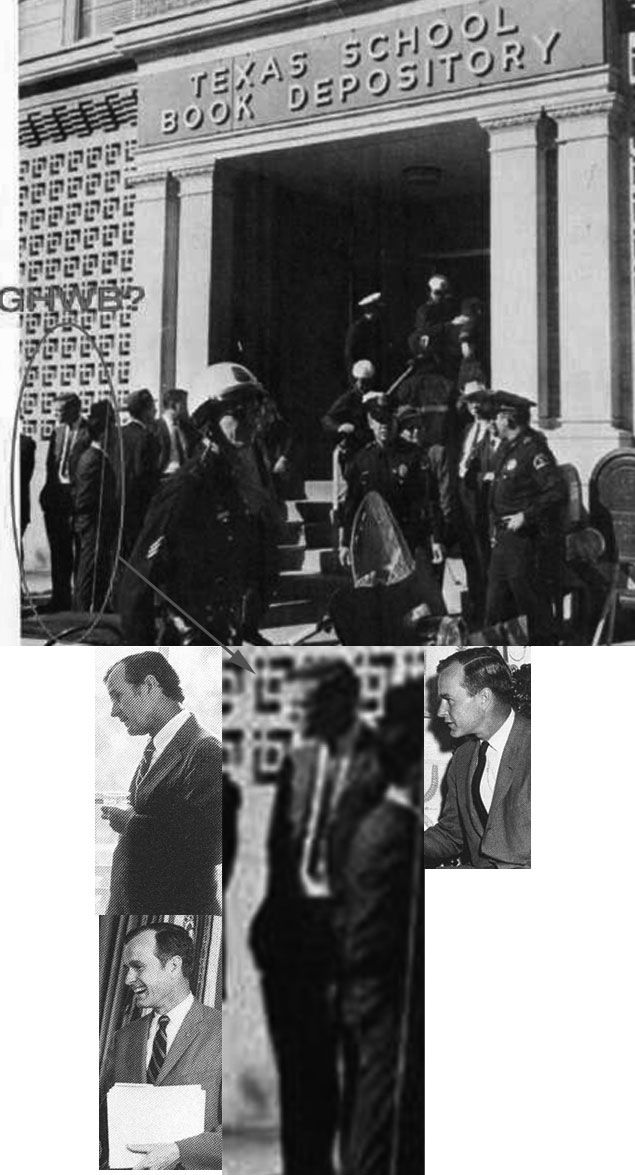
Another movie about the JFK assassination. As movies go, it's ordinary fare, and doesn't give much for the conspiracy theorists in the audience ("where was George Bush snr. that day?"). Not really sure if the brother of Lee Harvey Oswald being shocked by what his brother allegedly did, is a great story. Nor is the story of how the  Zapruder film became public knowledge, terribly compelling. One wonders if the good doctors who worked on the dying body of JFK were also the same doctors who worked on the dying body of Leee Harvey Oswald. It's a moderately interesting film as a companion piece to the truly in-depth 'JFK' by Oliver Stone.

'This Is The End'

Look, I'd understand it if the Illuminati secretly want to kill all smug celebrities and actors. No, really I do. This is a sorry excuse for a self-referential movie. It's really daft, and then it devolves into something really stupid. The only thing that should end as a result of this movie is their careers. I mean really, what the hell is James Franco doing in movies like this? The best shot in the film might have been the three-shot that reunites the threesome from 'Superbad'. Emma Watson's naff cameo is sort of amusing. The rest of the film is hard up for laughs. Jonah Hill's Exorcist-homage gag is just plain dumb.

'Mud'

Surprisingly good. This one works off the template of 'Stand By Me' but with less humour and more pathos. I thought it would suck but it didn't suck at all. The premise is rather peculiar, but the film just powers along with the off-beat narrative of the kids.  It has some great performances from the kid actors. Worth checking out.


2013/11/08

World War Z

Another Zombie Apocalypse

They keep making iterations of this idea. It comes out of 'Omega Man' which became 'I Am Legend'; there's also been '28days'; and now we have Brad Pitt braving the waters doing a movie about the rise of the zombies. Some have praised this film as being pretty good as Zombie movies go. Others have complained that it justifies Israel putting up a wall to separate out the Palestinians. It's hardly 'Moneyball' and it's certainly not that thought-provoking.

What's Good About It

Not really sure. Pass.

What's Bad About It

It looks tired. Brad Pitt looks tired. The whole thing looks worn out and boring. The kid actors playing Pitts daughters look tired and bored.

About the most novel idea of the film was the attempt to match the pandemic panic film with the zombie movie, except '28 Days' sort of beat them to that punch well and good and was a lot more compelling.

What's Interesting About It

It's not like it's a dead write-off but there's really not a whole lot that's interesting about this film. It's perhaps quite remarkable that way. I found none of it compelling or challenging or interesting. It's not allegorical, it's not metaphorical, it's pretty much a big budget Zombie movie starring Brad Pitt. It's about as sophisticated as 'Iron Man' without the witty quips.

It's not bad as such; there's craftsmanship in there aplenty but somehow it adds up to a largely innocuous zombie movie. In someways this is the dead opposite of something like 'Movie 43' which is clearly a bad film, but it has lots of interesting things to watch and talk about. One shouldn't set out to make bad films, but one also should not set out to make boring films either and this one is pretty tedious.


2013/11/07

News That's Fit ToPunt - 06/Nov/2013

Laurie Oakes' Body Slam... Okay, Just Slam.

The doyen of Australian political journalism, Laurie Oakes thinks Tony Abbott's government sucks so far when it comes to transparency.
"They’re busily trying to avoid the media as much as possible and to control the media and so far they’re getting away with it but I don’t think they will get away with it for too long," he said ahead of the release of his new book Remarkable Times: Australian Politics 2010-13.

"You can see the way the story of the expenses rorts is gathering speed, and that horse bolted because Tony Abbott and his Special Minister of State Michael Ronaldson didn’t move to nip it in the bud."They could have killed it off but they’ve got this attitude of not feeding the news cycle so it got away from them."

Other journos have voiced their concerns on the same point.
Since winning office, Abbott has fronted the nation's media just eight times. Calls to his office, and to his ministers, frequently go unanswered or unreturned.

During the week, Foreign Affairs Minister Julie Bishop was a star speaker at the Australian Council for International Development conference in Canberra. The two-day event was open to the public, including the media - except for Bishop's speech. It's understood the media was barred at the request of the minister, who is tasked with enforcing the government's $4.5 billion cut to foreign aid over the next four years.

Announcing the government would respond to Australia's ballooning credit card bill by almost doubling the borrowing limit to half a trillion dollars, Treasurer Joe Hockey held a 10-minute press conference and took few questions.

Immigration Minister Scott Morrison has radically overhauled the approach of his department and others to information about asylum seekers. No longer does Customs issue advice about boats in distress en route to Australia. No longer is information on boats arriving in Australian territorial waters released to the public as soon as it comes to hand. Nor is the rebadged Department of Immigration and Border Protection authorised to provide previously innocuous information about asylum seekers.

So there's a pattern emerging already and it seems that not only are they not willing to defend their decisions or thinking, they'd rather not talk about it; which of course underlines the inherently undemocratic instincts shown by the Coalition in the years since they won in 1996. Thee simple fact is that they don't want to talk about the areas that made much noise about while in opposition because it would show that it was all rhetoric and the Coalition have no better solution for the said problems.  Nobody's really surprised by this any more than we are impressed - we're not!

It's just a little funny watching journalists of the various newspapers complaining about it having supported Tony Abbott's cause on election eve with their stupid editorials. Yes, I'm looking at you Sydney Morning Herald.

It's enough to make you cry if it weren't so ironic.

Whatever It Is He Is Doing, He's Making A Hash Of It!
Then there's this thing here.
The making of effective foreign policy always looks easier than it is. As a result, new governments tend to underestimate the task. The Howard and Rudd/Gillard governments each made tentative starts on the international stage. The current government's diplomatic initiation has been worse. Even allowing for inexperience, the Abbott government appears to be setting a new standard for diplomatic ineptitude. The Prime Minister in particular has lurched from one mistake to another, with each episode more ham-fisted than the last.

Indonesia's sure as heck not happy with the Coalition duo of Abbott and Bishop. Julie Bishop's been doing the denying which strongly suggests that she's been doing the supplying, so to speak. On some level, you expect all embassies to be a hotbed of spying activity. So this emerging all of a sudden as an issue between Australia and Indonesia seems a little contrived.

Bruce Haigh at Crikey recently observed thus:
According to sources close to the Department of Foreign Affairs and Trade, President Susilo Bambang Yudhoyono (SBY) is less than impressed with Prime Minister Tony Abbott and Foreign Minister Julie Bishop. It is said this view was formed before the election, when Abbott, Bishop and now Immigration Minister Scott Morrison talked loud and long about turning around refugee boats and sending them back to Indonesia.
The rumour was confirmed when Abbott turned up late for two important gatherings at APEC where SBY was in the chair, and in case there are some who would to contest this, when the egos of heads of state are on the line the attendance at all meetings of conferences such as APEC are important.

Politicians and other public figures do not live in a vacuum; whatever is said domestically about another government will be reported, with comment, to that government by its embassy, and additionally its foreign ministry will pick up the remarks from wire service reports.

It is a measure of the lack of sophistication and parochial outlook of Abbott and the government he leads that there is an apparent failure to understand the way the world works. Infamously, South African minister of police Jimmy Kruger told a laughing crowd at a 1977 a ruling National Party conference that the death in detention of black activist Steve Biko “left him cold”. That remark haunted his government for years to come.
Some years ago Abbott told an ABC journalist that he sometimes said things he did not mean in order to meet the political imperatives of the moment. This was a rare confession from a politician. It is a pattern of behaviour by Abbott that has been confirmed over the past year, the most recent being the about-turn on his boats policy in Jakarta this month.

“A number of Indonesian specialists were adamant that Indonesia does not believe Abbott’s statements about respecting Indonesian sovereignty.”
According to a long-term Canberra insider, the Indonesians are well aware of Abbott’s propensity for saying whatever he thinks will solve an immediate political problem. They are aware of his bombast, his superficiality and his lack of understanding around the complexities of Indonesian culture and politics. A number of Indonesian specialists were adamant that Indonesia does not believe Abbott’s statements about respecting Indonesian sovereignty. They are also aware of his boasts, in the past, that it was the Howard government that liberated the people of East Timor. They remain concerned that an Abbott-led Coalition government would seek to do the same in West Papua.

The Indonesian elite are not blind to the policies employed in West Papua to keep the province within the republic. They may not like it, but as with Abbott’s approach to refugee policy they see it as necessary, with the use of force the only means to put down the separatist movement. DFAT sources say Abbott’s assertion to the Indonesian President that he admired and respected Indonesia’s policies in West Papua would have been received with scepticism and regarded as patronising.

In sending that stuff to me, Pleiades made the observation that this business of Indonesia could open the floodgates for stuff Indonesia's been holding on to for a rainy day; like say a paedophilia ring run out of DFAT personnel say. This might be just the beginning of where Indonesia unleashes the shit file on us just to humiliate the Abbott Government. I mean, at this point, why wouldn't you? It's not like there's any prospect for proper respect coming from Tony Abbott and his morally-flexible rhetoric.

Denial Is A River That Runs Through Conservativism

We haven't heard much from little Johnny lately, which has been great. when he pops up, he tends to make our days worse. Here, it seems he's been out spruiking the cause of climate change denialism.
London: Former prime minister John Howard has poured scorn on the "alarmist" scientific consensus on global warming in a speech to a gathering of British climate sceptics, comparing those calling for action on climate change to religious zealots.

Mr Howard said he was an "agnostic" on climate science and he preferred to rely on his instinct, which told him that predictions of doom were exaggerated.

He also relied on a book written by a prominent climate sceptic, which scientists have attacked as ignorant and misleading.

And he called on politicians not to be browbeaten into surrendering their role in determining economic policy.Nuclear power – a "very clean source of energy" - shale oil and fracking were solutions to the world's energy needs, Mr Howard said.

Mr Howard's speech in London on Tuesday night was to the Global Warming Policy Foundation, a think tank established by Nigel Lawson, one of Britain's most prominent climate change sceptics, former chancellor in the Thatcher government and father of TV chef Nigella.

Mr Howard revealed before the speech that the only book he had read on climate change was Lawson's An Appeal to Reason: a Cool Look at Global Warming, published in 2008.

Mr Howard said he read it twice, once when he was writing his autobiography, when he used it to counter advice for stronger action on climate change given to him by government departments when he had been prime minister.

But the book has been attacked by climate experts.

So, the former Prime Minster of Australia - in his time in office - decided to look into the topic of Global Warming and chose to read one book, and one book alone, written by a climate change denialist. He read it twice to crib notes and mount his own denialist rhetoric, probably because he saw the political problem of climate change as something that needed to be couched in the traditional Left-Right framework regardless of actual facts and figures and projected ramifications. It's a miracle his government got to the point of proposing an ETS! This would be the one Tony Abbott is trying to tear down in the name of repealing the Carbon Tax.

Today, we can understand that both John Howard and Tony Abbott are ferocious, committed climate change deniers with the latter set to wreak havoc on whatever paltry steps we've taken to control the problem. It's hard to fathom how deep this river runs between these two men, but it brims with anti-scientific bullshit. One of the worst things to have happened to the debate is that the deniers keep getting a more than generous equal airtime hearing of their stupid position.

At this moment in time, it is completely accurate to quote Tenacious D: "The Government Totally Sucks".

Oh great.

2013/10/29

News That's Fit To Punt - 28/Oct/2013

Foreign Misadventures

The worst aspect of Tony Abbott might not be his stupidity but his inability to represent all of Australia. You expect the Prime Minister of Australia to front for the whole nation when he speaks to foreign media, but not Tony Abbott. He can't resist the urge to put the boot in to his domestic opposition. Here's the offending bit in the Washington Post:

Labor wanted a national broadband network?

It’s a government-owned telecommunications infrastructure monopoly, which was proceeding at a scandalous rate without producing any commensurate outcomes. We are changing the objective from fiber to every premise in the country to fiber to distribution points, and then we will use the existing infrastructure to take the broadband to individual premises.

Is that cheaper and more efficient?

Vastly.

But Labor wanted to extend fiber to every household?

Welcome to the wonderful, wacko world of the former government.

So you believe the former government was doing a lot of things that were bad for the country?

I thought it was the most incompetent and untrustworthy government in modern Australian history.

Be more specific.

They made a whole lot of commitments, which they scandalously failed to honor. They did a lot of things that were scandalously wasteful and the actual conduct of government was a circus. They were untrustworthy in terms of the carbon tax. They were incompetent in terms of the national broadband network. They were a scandal when it came to their own internal disunity. They made a whole lot of grubby deals in order to try and perpetuate themselves in power.  It was an embarrassing spectacle, and I think Australians are relieved they are gone.

Where does one begin with how this interview exchange is so wrong-headed. You all know how I feel about the NBN, so it surprises me none that Tony Abbott is trying to paint the NBN as evidence of how the ALP were "wacko". No evidence, just a straight up assertion as if its some kind of self-evident thing when the opposite is clearly true. This is followed up with this sloganeering assertion that the former ALP government were somehow lying incompetents. No evidence. So when he gets pressed on the points, he makes a whole bunch of blank assertions - none of which are factual - and finishes off with another crappy assertion that I'd like to see tested at the ballot soon.

I don't know about you, but I don't think this "throw the other party under the bus at every opportunity" style of conduct really is becoming of a Prime Minister. It's the dead opposite of what he's supposed to be doing when he is representing our polity. Regardless of our differences in our nation, when he's talking representing Australia, he's supposed to have the common decency to be speaking for the whole nation. Not just for the people that voted for him.

That Tony Abbott was given to talking out of his hat was a known quotient. What was not really understood was how he would use such an interview to keep playing these domestic politics. This has surprised quite a number of people.

Norman Ornstein, an author and political scientist with the right-leaning American Enterprise Institute, said he ''winced'' when he read the interview in which Mr Abbott put the boot into the Rudd-Gillard government in unusually strong language for a foreign interview.

''It really does violate a basic principle of diplomacy to drag in your domestic politics when you go abroad,'' Dr Ornstein said. ''It certainly can't help in building a bond of any sort with President Obama to rip into a party, government and - at least implicitly - leader, with whom Obama has worked so closely.

''Perhaps you can chalk it up to a rookie mistake. But it is a pretty big one.''

Politicians around the world typically refrain from engaging in fierce domestic political argument when they are speaking to an overseas audience.

It's a worry he's gallavanting around the globe like this. Which reminds me of something I learnt way back when: The number one rule after a bad shoot is that you never bad mouth your own production. It might have been hell to work with so-and-so, but if you ever find yourself in front of a camera or a ape recorder, you're supposed to say, "It was great. It was fantastic working with So-and-so."

Grin and bear it for the production so that it has some shot of surviving the market place.That's the golden rule.

Tony Abbott should have grinned and beared it and said, "Hey, the NBN was an adventurous idea in its time but we're trying to be more pragmatic."  Instead he threw the ALP under the bus and made Australia look foolish. I guess you send an idiot to to do a job, you get idiotic results.

While I'm on this one, Pleiades sent me an article, presumably from Crikey which went through the ways in which Tony Abbott flubbed Australia's position with Susilo Bambang Yudhoyono in Indonesia:

According to sources close to the Department of Foreign Affairs and Trade, President Susilo Bambang Yudhoyono (SBY) is less than impressed with Prime Minister Tony Abbott and Foreign Minister Julie Bishop. It is said this view was formed before the election, when Abbott, Bishop and now Immigration Minister Scott Morrison talked loud and long about turning around refugee boats and sending them back to Indonesia.

The rumour was confirmed when Abbott turned up late for two important gatherings at APEC where SBY was in the chair, and in case there are some who would to contest this, when the egos of heads of state are on the line the attendance at all meetings of conferences such as APEC are important.

Politicians and other public figures do not live in a vacuum; whatever is said domestically about another government will be reported, with comment, to that government by its embassy, and additionally its foreign ministry will pick up the remarks from wire service reports.

It is a measure of the lack of sophistication and parochial outlook of Abbott and the government he leads that there is an apparent failure to understand the way the world works.

So far, he's been quite adept at making an ass out of himself on the international stage. In that way he is exactly like his mentor John Howard, a man you'd be embarrassed to show anywhere on the planet.

Screen Australia Still Sucks

This one comes from Monologan.

I must confess, I’ve been feeling uneasy about Screen Australia for some time now.

I’ve never been able to shake the impression that the whole thing is something of a club. When announcements come through of the latest beneficiaries of the millions of taxpayer dollars that go into feature and television production, the same names tend to pop up again and again. Even if their films lose money at the box office again and again.

And in part, I’m uneasy because I feel conflicted about whether those millions of dollars should be spent at all, when they as often as not appear to be used to prop up a local film industry incapable of standing on its own feet, rather than in primarily funding the telling Australian stories. The decision to pour millions of dollars into the quintessentially American story The Great Gatsby is a good recent example. If the car industry no longer needs propping up, why should the production sector? But that’s a debate for another day.

The reason for writing this now though is the fact that it emerged last week that Screen Australia had ponied up $50k to get The Conversation writing about the screen industry more regularly.

I say emerged, because normally, Screen Australia holds a board meeting, then issues press releases about the projects it intends to fund.

The trick is that the guy writing this runs Encore magazine:

I’m heartened that Screen Australia now recognises that “arts journalism is under pressure”. Based on our previous experience, Screen Australia doesn’t spend its “sponsorship” money easily. In the four years or so we’ve owned Encore – which is the oldest title of its type with a three decade heritage in the production sector – our sales team have never been successful in persuading them to spend a single dollar on sponsorship or marketing – and indeed they never once put out a brief. A cynic might say that they don’t like some of the things we’ve written so it was never going to happen anyway. But there again, perhaps our sales director, otherwise excellent at his job, just had a series of off days on the five or six occasions he went in to see them. Either way, having closed the loss making print edition last year, I can’t help ruminate on what a difference $50k would have made to the title.

But I can’t help thinking that the explanation is more likely to be that Screen Australia took a liking to the cut of The Conversation’s jib, and decided to find a way of helping it out. If you’re wealthy like Global Mail’s funder Graeme Woods or are a business with a budget for this sort of thing like CommBank, that’s fair enough. But if you’re a public body, you have a duty to do these things in a fair and above board way, no matter how worthy the recipient.

I think The Conversation deserves the money. I just don’t think that Screen Australia can justify how it made the decision.

If you don’t want people to think you’re a club, then don’t act like one.

So, yes. It does look like a club, and it's pretty friggin' awful.

2013/10/26

Russell Brand's Revolution

His Take On The Infeasibility Of our Civilisation

This is worth a read.

While I don't agree with all of it, it's still good to know somebody is writing something fundamentally questioning the value of our current social systems in a big publication.


2013/10/25

A Pack Of Liars

No, Really, Won't They Stick To Their Lousy Script?

The worst thing about the 2013 Federal election - apart from the obvious that the idiots won - might be that the Coalition ran on statements that really have no bearing to what they are actually doing, now that they are in government. It's hard to say who the worst offender is because they're all doing dodgy things on the public purse and Tony Abbott is the leader amongst this group of perk partiers. I'm sure when they called their party the Liberal Party, they didn't mean their attitude to the public purse for private concerns.

Tony Abbott in fact has been amazingly incapable of living out his own script where he would rush off to Jakarta in his first week (he didn't) and he sure as hell isn't going to reel in the deficit any faster than the ALP would have. Now we find Joe Hockey has gone and given a pile of money to the RBA - because they asked nicely - but this money is going to blowout the deficit this year.
The Hockey of ''budget crisis'' fame, the government debt warrior, the dry who never met a deficit he didn't hate, has turned into the half-trillion dollar man, spent all the $7.1 billion in policy savings he was trumpeting just five days ago and blown out this year's deficit by $7 billion beyond Labor's best efforts. And the financial year is young.

Overshadowed by the commission of audit announcement and boosting the debt ceiling from $300 billion to the magic half-trillion is the former fiscal Scrooge playing Santa Claus down at the Reserve Bank. Will Joe Hockey raid the RBA for a dividend with which to shave the deficit? What a foolish and wrong-headed question I posed here on Monday - Joe is giving the RBA $8.8 billion, which, obviously, blows out the deficit by the same amount.

Not content with that Joe Hockey is scrapping the Mining Tax
‘‘The minerals resource rent tax (MRRT) is a complex and unnecessary tax which struggled to raise the substantial revenue predicted by the former government,’’ Treasurer Joe Hockey said in a statement. ‘‘This failed tax imposed significant compliance costs on one of our most important industries, while damaging business confidence which is critical to future investment and jobs.’’

While many of the measures linked to the tax will also be scrapped, the coalition government will keep the increase in compulsory superannuation from 9 per cent to 12 per cent, currently paused for two years.

Mr Hockey said the government was still considering the issue of the ‘‘onshore administration’’ of the petroleum resource rent tax.

The draft laws repeal a range of Labor policies including the SchoolKids Bonus, the business loss carry-back, accelerated depreciation for motor vehicles, geothermal exploration provisions, the low income superannuation contribution and the income support bonus.

The bill also gets rid of the reduction in the small business instant asset write-off threshold.

So if you're a small business owner and voted Liberal (because you're a self-interest-driven knob), this is the bit where you should be complaining that the Liberal Party is looking after the big end of town again, and selling you down the river all the while claiming to represent you in government.

Walk-off HBP sent in this link where Penny Wong explains just how mendacious this Coalition lot have been.
Details about asylum seeker arrivals are being withheld – apparently the entire nation imagined the Coalition’s announced tow back the boats policy. Despite promising severe regulation of foreign investment, the government is now proposing to rush through free trade agreements. Now Joe Hockey has announced the details of their commission of audit, a well-used Liberal tactic to make drastic and punitive cuts to services, kept secret before the election.

Not only is this a government that isn’t doing what it said it would do; it doesn’t want to tell Australians what it’s really doing.

Over the last few years, Tony Abbott and Joe Hockey were unrelenting in their scaremongering over the state of the nation’s finances; Australians were told that “there is now a budget emergency”, and, worse, that Labor was “drowning the nation in debt”.

But, now in government, the Liberals tout some debt as “good” and the “budget emergency” appears to have disappeared. So much so, under the Coalition, the nation can now apparently afford a $500bn debt ceiling. So much for the “budget emergency”.

Just pause for a moment and imagine the extent of Hockey’s hyperventilation had a Labor treasurer proposed such an increase.

The new treasurer has flagged higher infrastructure spending funded by government borrowing – that is, by debt – and the assistant infrastructure minister, Jamie Briggs, blithely suggests thinking “more broadly” about using the Commonwealth balance sheet.

Of course, when Labor borrowed to invest, Abbott and Hockey declared a “debt crisis”, but now they are finally being honest that some borrowing can be smart.

Well, yes Ms Wong, they lied. And they still won. It makes for much misery.

How Does Greg Hunt Live With Himself?

It's a mystery how party politics can change a man's convictions so he is willing to argue white is black for the sake of party unity. As we all know by now, Greg Hunt is entirely willing to do or say anything for the sake of holding power.
Environment Minister Greg Hunt has hosed down suggestions of a link between climate change and increased bushfire intensity, saying he had ''looked up what Wikipedia'' said and it was clear that bushfires in Australia were frequent events that had occurred during hotter months since before European settlement.

Yes, the Minster for the Environment gets his facts from Wikipedia, and not from the scientists in his own department. Of course, given that this is an administration without a Minister for Science, it is entirely believable that he had nowhere to go but Wikipedia given his lack of faith in such things as facts.

The epistemological problems of quoting Wikipedia seems to have escaped the minister as his own entry descended into a farce.
"He [Hunt] is notorious for using Wikipedia to conduct research on environmental issues on Wikipedia despite having access to a vast bureaucracy staffed by some of the finest and most dedicated minds in the nation, like some total turd. Critics concede that his 1990 Honours thesis on the necessity of a carbon tax was probably more academically rigorous than the manner in which he comports himself as one of the most powerful people in the country, but others defend their characterisation of the Environment Minister as an utter weiner."

I know I quote Machiavelli a lot here but it has to be said that Niccolo Machiavelli made the important point that contempt is the greatest enemy of the Prince, and here we have a politician held deeply in contempt. At this point you wonder if the Coalition has anything positive to enact or do to help the environment. It looks pretty unlikely based on the last 6 weeks since the election.

The Abbott Government has been a bus crash and they haven't even sat in Parliament properly yet.

2013/10/24

A Poem For A Lost Soul

It's An Ode, So To Speak...

I don't write poetry normally. As writing/scribbling/doodling goes, it's not my strong suit.  I've written all of 2 poems in my life, ...and this is my second.


Farewell to thee, the blossom of youth,
Errant of soul, fragrant of flowers,
Sheveled, feckful, innocuous, couth,
gainly and gaumy; righteous upon the hour.
Thy kingdom cleansed of signs of hell
thine yacht has sailed to the Isle of Id
Look not back to thy towering success
'tis but a dream of deeds gone unbid
When ultimately thine remembrance comes,
Recall then thou were'st once young, dumb,
and full of cum.

2013/10/21

Unrepresentative Swill

While I'm On A Roll Ranting About The Coalition Government...

Here's something interesting.
She's offered it only within the confines of the government, but word is Peta Credlin has some world-weary advice for rookie Labor leader Bill Shorten: if you're serious about making Labor competitive again in 2016, you best swallow hard, take a deep breath, and turn your back on carbon pricing. And you best do it now.

It's that simple. Or is it?

That Credlin is Tony Abbott's chief of staff, is enough to provoke suspicion. Indeed, coming from the respected but highly partisan Credlin, such unsolicited advice is just as likely to make the ALP cling ever more determinedly to its carbon pricing commitments like the proverbial … to a blanket.
But some in Labor are beginning to question the longer-term implications of an automatic assumption of staying the course. Ever so quietly, they are whispering ''hold on, let's just think about this''.

One of those is thought to be Shorten himself - the man Abbott described this week as ''nothing if not pragmatic''.

Abbott's super-focused Environment Minister, Greg Hunt, agrees the term ''pragmatic'' was a coded appeal to Shorten's personal exceptionalism - his sense that, more so than his colleagues, he is a realist and will do the political maths pretty dispassionately when needed.

Credlin, of course, knows first hand about the wilderness Shorten has just entered.
As an adviser in the Howard government and then as chief of staff to a succession of leaders - Brendan Nelson, Malcolm Turnbull, and finally Abbott - she has seen her share of political failure.

Just for the record, Peta Credlin isn't anywhere near being an elected representative of Australia's constituency. Yet there she is offering unsolicited advice to the new Opposition Leader in the most patronising of ways. But basically she's saying, roll over and play dead or you won't have any shot at winning government. And she says this from her authority of having been chief of staff to Nelson, Turnbull, and Abbott - but hey is that a position you get voted in. Uh, didn't think so.

It says she thinks the Coalition won government on its policy platform when in all likelihood the electorate rejected the riven and fractured ALP government. What's worse is that the ALP allowed it self to be so riven and fractured just by having Tony Abbott saying a bunch of ridiculous things over and over again. But the main point is, if Peta Credlin thinks they won on the back of policies, she is so wrong it's not funny. But this is a good thing because it means they're willing to go to a Double Dissolution, because they really believe in their own bullshit. This is going to be really interesting if it gets to that point.

The Honorable Clive Palmer, Mouthbreather Patrician

It's really difficult to watch Clive Palmer giving speeches because he's such a mouth breather. He sounds like his nose is perpetually blocked, and you start to feel like you're running out of breath, just listening to him.

Anyway, Clive is saying he won't pass anything until he and his ragtag bunch of Climate Change Deniers gets treated like a major party. I guess he doesn't have a problem being described as 'entitled'. He's playing brinkmanship with Tony Abbott knowing full well Tony Abbott needs the balancing block to repeal the "Carbon tax". What's even stranger is that he wants to be reimbursed the Carbon tax already paid by his company. Otherwise, Abbott won't get to repeal the Carbon Tax after his Senators take up their positions in the Senate after June next year.

Now, I don't know about you but this strikes me as a massive conflict of interest. You never saw the Australian democrats make this kind of demand when they had the balance of power - not in the most fey and feckless moments of Cheryl Kernot, or the closet-Liberal moments of Meg Lees, or for that matter the petulant and idiotic moments of Natasha the Stoat-Destrpoyer. Not even Bob Brown made demands like that. Cheryl or Meg or Natasha or Bob never said "I won't pass this legislation unless I get a tax refund on a previously-legitimate tax that I paid."

How is this not a massive conflict of interest? Forget for the moment Clive is saying he's effectively going to block Tony Abbot from governing unless he gets what he wants which is Tea-bagging enough. Forget all those weird-ass expenses MPs have been racking up at the tax payers expense. Clive won't say yes to anything unless he gets a refund for the Carbon Tax.  He wants a freaking ransom!

Paul Keating was sure right about the Senate being unrepresentative swill. I sure as hell can't believe how Australia saddled itself with such a crazy Senate.

Sleep Driving

Really? The Politicising Only Started Now?

What is a sane person to do when confronted with this?
Environment Minister Greg Hunt has condemned attempts to link the bushfires to the need for greater climate action as politicising a ''human tragedy''.

Amid concern among scientists and environment groups that the ferocious fires before the start of summer were part of a pattern of increasing extreme weather events, Mr Hunt's office dismissed questions about the need for a more ambitious climate policy.

After Greens deputy leader Adam Bandt provoked controversy by linking the risk of bushfires to Mr Abbott's plan to scrap the carbon tax, Mr Hunt said that nobody should politicise a tragedy. ''There has been a terrible tragedy in NSW and no one anywhere should seek to politicise any human tragedy, let alone a bushfire of this scale,'' he said.

Wasn't this the Environment Minster for the Party that just spent the last 3 years politicising Global Warming in the face of mounting evidence? I know that we have freedom of speech but sure that doesn't mean unlimited access to hypocrisy and stupidity, does it? Or are we so tolerant now of head-in-the-sand-Climate-Change-Denialism, that we just accept this kind of rhetorical positioning? It's clearly at odds with the narrative of the coalition that Global Warming and Climate Change are somehow in the category of maybe but when the evidence is glaring in your face, and not for the first time but on a daily basis for about a 5weeks since the election - and election day that happened on the warmest September day on record to boot - isn't it disingenuous to try and hose down the obvious debate to be had by saying we shouldn't politicise it? Weren't they the party that politicised it first in this term of government by shutting down the Climate Change Commission?

And that's being delicate about it. The fact is, they politicised it when they decided they didn't agree with the science, as if there were any rational ground for an argument about the nature of global warming.

There's a view going around that the Coaltion have no intention whatsoever of making any kind of serious dent in emission because they don't believe in the science; that the whole point of the Direct Action plan is that it's really not going to do much, and that should be the way business like things. It kinds of ignores that fact that agribusiness operates in the context of the environment and the last time we had a drought, it brought the Nationals to their senses briefly in endorsing an ETS under John Howard. What's worse, Greg Hunt devised it. Which is the same ETS the ALP set up because it was a market-based solution as opposed to a big tax on the emitting businesses like the Direct Action plan being proposed by Greg Hunt. You really have to wonder about a man who wrote  a perfectly fine bit f policy, then didn't get to implement it; who then had to write a worse policy just to get elected and now must sell it against his better idea. As in, how does he sleep at nights?

You sort of wonder what you'd get if you interrogated him with truth serum and polygraph. What the hell can this man be thinking? Forget Howard who was by temperament a disbeliever, or Tony Abbott who is by ideological bent, a disbeliever. What sorry ass ground has Greg Hunto got to be standing on to be even saying we shouldn't be politicising this now. If not now, then when did we stop politicising the science of Global Warming, Mr Hunt? Did we conveniently decide upon this on the day your party won office?

Let's put things into to perspective. After the hottest September on record, we're having the kind of October that wouldn't be out of place as being a January when we normally have these big bushfires. We may have record breaking sequence of November through to February this year with a drought thrown in. All of it presumably from Global Warming caused by human activity, but at what point do we get to talk about it as apolitical issue without offending the fine, delicate, vulnerable sensibilities of Greg Hunt?

The truth is, Global Warming is the elephant in the room you are furiously trying to ignore, except the more you ignore it, the more it grows and the more it throws the weight around in the room. So, as environment minister it must be asked of Mr. Hunt: what the hell are you going to do about all this? Are you really going to dismantle the system you designed to incentivise the cutting of emissions? Are you really going to replace that system with a system that has far less scope of working? Is your choice really, doggedly to choose sleeping at the wheel?

2013/10/19

Generation Change

The ALP's Gen-X Crew

The Herald was making the point today that the ALP have gone Gen-X with their choice of frontbench. When you think about it, Bill Shorten is 46 going on 47 so that puts him at the older range of Gen-X, and Tanya Plibersek at 44, it's true that the ALP have indeed gone Gen-X. I have a late Boomer friend who tells me that all this demographic stuff is just a construct not worthy of analysis, except I've been writing here under the banner of 'Gen-X View Of The Universe' for a good 5 years now. It obviously means something.

What could it mean?

The Generation X politician in Australia would have arrived at Tertiary education after the AUS was disintegrated by the likes of Peter Costello and Tony Abbott in 1983, Interestingly enough, Julia Gillard was the last President of the AUS when it collapsed in 1983. If you anted a model to the fractious politics of the Julia Gillard Prime Mininster-ship, you would have found it in the demise of the Australian Union of Students, with the same cast of late Baby Boomers thrashing and trashing institutions to make their political mark. What's scary is that they're still around aplenty in the Liberal and National party ranks, and they probably still don't think much of indulging in that sort of ratbag behaviour. This explains the histrionic opposition style Tony Abbott chose to work with - because it is the method he used in his youth to destroy the AUS , headed up by Julia Gillard. Worse still, it worked again, so that may be why he's so convinced he has some kind of mandate.

The demise of the AUS and the years where there was no student lobby until the NUS got up in the late 1980s allowed HECS to be brought in. Unlike the Baby Boomers, most of the Gen-X politician would have had to pay HECS. When they say education and the opportunities it affords are important, they know what they are saying. All these things are intimately entwined.

If there is one thing that I do think is encouraging about the Gen X ALP politicos is that they are of the generation that had to put back together the NUS and have the experience of rebuilding institutions. If the ALP under Rudd-Gillard looked positively fractured, then I think the current group might be able to start from scratch and build a proper agenda that suits the time. As I wrote the other day, I'm feeling fairly optimistic about the Shorten-Plibersek team, much more so than I felt about the Rudd-Gillard team when they first rose to the level of Opposition leader and deputy back in 2006. They're not perfect human beings and they will make their mistakes. I just don't think they're as fractious and crazy as the generation of politicians who were forged in the dying days of the AUS.

Right now, the Coalition are the party of the Baby Boomers much more than Gen-X or Gen-Y by dint of the ageing population and makeup of the Liberal and National Party demographic. The fissure hasn't been more stark than any other time since Mark Latham as late Baby Boomer was taking on John Howard who was born before the Boomers. That fissure sort of leaves the current ALP firmly in the Gen-X camp with the hope of picking up a big portion of support from Gen-Y.  The question then is whether Gen-X+Gen-Y interest is a big enough voting constituency to overcome the Baby Boomers' interests in their twilight years.

Demographically speaking, Gen-X is small and shorter than either the Boomers before or the Gen-Y that follows. That being the case the duo may never make it. And if they did, they may be seen off by a Gen-Y politician. Consider the American experience. Bill Clinton was the first Boomer President, who was followed by George W. Bush who was followed by Barack Obama, all of whom are Boomers. All three Presidents won two terms, so the Baby Boomer reign will last 24years. If a Gen-X candidate won 2 terms after Obama, the next election after that will likely see a pair of Gen-Y candidates. It's entirely possible there will never be a Gen X President of the United States.

Similarly, I don't see any Gen-Xers knocking on the door in the Coalition ranks. If Abbott is replaced for some reason, it's possible the leadership reverts to Malcolm Turnbull or goes to Joe Hockey - both of whom are Boomers. The longer the Coalition stay in power, the less chance there will be of a government of Gen-Xers in Australia.

So when you look at it through the demographic filter, that's what we have with Bill Shorten and Tanya Plibersek: The one and only shot at Gen-X forming Government in Australia.

2013/10/16

News That's Fit To Punt - 15/Oct/2013

Tony Says He's Got A Man Date

It's a bit gay isn't it Tony?

Alrighty, so Tony Abbott is saying that he has a mandate to repeal the Carbon Tax. He's been banging on with this since winning the election and as far as we can tell, he's put the topic at pole position of his agenda in Parliament. I guess if you say you're going to do it and win an election it might look like you have a mandate but most people polled seem to think this is a terrible idea; and that the reason they voted for Abbott was because they reviled the Rudd-Gillard-Rudd ALP so much but hadn't really given much thought on the ramification of ousting the ALP government.

So much for the wisdom of crowds. Our electorate is stupid.

You can basically see that not too deeply down, Tony Abbott is still a Climate Change Denialist who has hijacked the agenda so he's in a hurry to sort this out in favour of his denialist position as quickly as he can. This then turns into the absurd spectacle of Tony Abbott trying to apply pressure on to the new Opposition Leader Bill Shorten like so:
Prime Minister Tony Abbott says he believes Bill Shorten will be forced to back the Coalition's plan to repeal the carbon tax, saying Labor's new leader is “nothing if not a political pragmatist”.

Mr Abbott dismissed the new Labor leader's repeated statements in support of pricing carbon, saying his government was “giving the Labor Party a chance to repent” on the issue.

It's interesting how he uses that word "repent", as if introducing the Carbon Pricing mechanism was somehow a sin. You imagine that in Tony Abbott's mind, any market driven mechanism to push down carbon emissions is somehow 'evil' (like 'adultery' or 'murder' - the mind boggles). Is it the tax part that bothers him? Or is it simply that he just disagrees with the mountain of scientific data?

Whatever little faith you had in his Direct Action policy to replace the Carbon Emission Trading Scheme evaporates like so much morning dew in the rising heat when you consider that word "repent".

I Voted For Him But He's A Terrible Pundit

Mark 'Arm-Breaker' Latham said that the ALP faithful shouldn't vote for Anthony Abanese because 'Albo' had terrible political instincts and was basically too wishy washy for Mark Latham's Liking. Whilst ranting on against union power and factional deals within the ALP, Latham said he was voting "ABA. Anybody-But Albo". Which is to say he voted for Bill Shorten but didn't really want to endorse Bill Shorten in any positive manner, no.

I guess Bill Shorten is a tough character to take given the Rudd Gillard years and the role he played in both PM swaps. As 'faceless men' go, he's been the very public face of the faceless men, and so, on some level probably deserves to be given the shot in the same spirit that led to John "I don't take bribes But I don't report Them' Robertson leading the ALP in NSW. I guess we could be heading for a travesty with Bill Shorten as Opposition Leader but I doubt Albo was a better choice.

While I am no member of the ALP - so this is completely an outsider's view - I think Albo was and still is a potential liability. One shouldn't cast aspersions but one has to ask how close Albo is to Eddie Obeid and whether he will get linked to those wonderful ICAC hearings slated to deal with the morbid Obeidity in NSW. Oh, and that Ron Medich guy who put out a hit on that McGurk guy. In that sense 'Deputy Prime Minister Albo' might have been the high point of Anthony Albanese.

Shorten has his failings. People have been writing about those in spades. In amongst reading all the bad press, one thing I did like about Bill Shorten was that after he switched back to supporting Rudd, he came out fighting. He wasn't fighting for his reputation, but for deeply core ALP values. You know, the stuff we always ascribe to Gough and Bob and Paul. On that level he appears to be a politician who speaks on behalf of a greater portion of Australia than Julia Gillard, while possibly not having the insane charisma of Kevin Rudd. You'd have to say the guy has a fighting chance; especially against a willful, dogmatic, Tory ideologue like Tony Abbott.

The other net benefit of the Shorten leadership over an Albo leadership is that you get Tanya Plibersek as Deputy Opposition Leader.I'll be honest with you, I think Tanya Plibersek has been great through the election campaign and into this post-election period. Any time I've seen her on Q&A, she's been setting the record straight and has countered the attempts by the Coalition to paint the Rudd-Gillard government as somehow a failed government. She's been logical, persuasive and very circumspect.

If you had to come up with a credible one-two punch, it's hard to do better than this duo, given the ALP's current state. Anna Burke might feel bitter and twisted about the shadow cabinet selection, but the Shorten-Plibersek team up gives you a lot of hope that the ALP can get their mojo back. When I think back to how negatively I felt about the original Rudd-Gillard team up back in 2006, I think this is a lot more promising. And I never thought I'd be saying that so early after an election loss. They haven't even gone back to Parliament yet.

Housing Bubbles Are Harder To Observe Than The Higgs Boson

Look, if a Nobel Prize winning economist says you're in a housing bubble, you probably are in a housing bubble.
Robert Shiller, the joint winner of the Nobel prize for economics, is worried about bubbles. The Yale University professor expressed alarm at the rapid rise in global house prices soon after the award was announced.

"There are so many countries that are looking bubbly," he said.

If he's right, and bubble trouble besets Australia, it's bad news for growth and jobs.

The Reserve Bank has cut interest rates to record lows to encourage businesses and consumers to spend and invest as the effects of the mining boom fade. The aim is to boost non-mining sectors like home building, retail and tourism so they can take over from mining as drivers of national economic growth.

But low interest rates have also stoked demand for established houses. Sydney has led the way – the city's median dwelling price (comprising houses and units) rose by a frothy 13.1 per cent in the year to September.

If house price growth becomes unsustainable the Reserve might decide to take some heat out of the property market by lifting interest rates. It would be unlikely to tolerate the longer-term risk of a devastating house price collapse.

But under that scenario, interest rates would be set at a higher level than required by the broader economy. The cost of containing house prices could be subdued growth and fewer jobs.

The really odd thing about all this is that the RBA has been insisting we don't have a Housing Bubble in face of the same evidence being presented to the Nobel Laureate Economist. I mean, we take the existence of the Higgs Boson on about the same level of scrutiny - and they gave Dr. Higgs his Nobel earlier in the month - so I'm sitting here wondering what exactly the RBA thinks is going on that makes it not a bubble; but here it goes...:
But AMP capital chief economist Shane Oliver believes many of them don't fully understand Australian property markets.

"The basic problem here is a lack of supply caused by chronic under-building," he said. "There is a shortage of housing in Australia and that partly explains why it is so unaffordable."

Given the blend of very low interest rates, a stable economy and pent up demand, it is no surprise property markets are showing signs of life. While Sydney property prices have grown strongly in the past year, this follows nearly a decade of weak growth. Data published by the Housing Industry Association this month shows the average annual growth in Sydney house prices over the past 10 years has been just 3.4 per cent – a rate that has hardly kept up with wages.

At this stage, the Reserve Bank isn't convinced by talk of housing bubbles in Australia. Last month the bank's assistant governor, Malcolm Edey, said those predictions were "unrealistically alarmist".

Dr Edey cautioned against reaching for "the bubble terminology" whenever house price increases were higher than average, because by definition that's half the time.

AMP Capital's Shane Oliver offers an explanation why Australian real estate is so expensive and unaffordable, but it's really not an answer as to why or how this is not a Housing Bubble. The RBA says if you take the average growth of property in Australia, it's only 3.4% p.a. which sits behind wage growth over that time, so it can't really be considered a bubble. I'm more interested in how that 'average' was derived, because the mathematician inside me smells a rat.

I guess we'll just have to wait and see how things play out.

2013/10/14

Movie Doubles - 'The Great Gatsby' (1974) & 'The Great Gatsby' (2013)

"Gatsby? What Gatsby?"

Just so you know, that line has to be the cheesiest line in both versions. Neither Mia Farrow nor Carey Mulligan pull off the mixed sentiment of excitement and feigned indifference. I can't think of a single actress who could do that, so it's no knock on Farrow or Mulligan; just saying. Though one can say, "what Gatsby indeed?" because never has there been a remake that was so redundant as the Baz Luhrman film. It's true, the old one has dated considerably in its shooting technique; but it's not like the new version really substantially added any insight into the book. If anything, it looks more like a forgery than a remake.

Watching both versions, you come to realise that F. Scott Fitzgerald wasn't a great dramaturg when it came to the characters in his novel. He's so preoccupied with the particulars of the characters that he seems to forget that there is some kind of reason for those character  other than for the display of his characterisation. In may ways the book doesn't have a lot of dramatic turning points so both versions of the film lurch from one loose moment to the next with only the most vague of causation. The end arrives as abruptly as the action starts to get a little interesting.

The Plaza Hotel Scene

The most conflict-ridden scene is the Plaza Hotel scene where things come to a head when Gatsby forces Daisy to tell Tom she doesn't love him. But of course she breaks and says that she loves both men. In both versions this results in a closeup of shock on Gatsby played by Robert Redford and Leonardo DiCaprio respectively. The shock on DiCaprio's version is actually priceless.

It's interesting that the identical scene is written 40years apart and remains mostly the same and true to the book. Yet, when seen back to back it is clear that there is some attempt by the characters of the 1974 version to settle things as adults, while the 2013 version seems to be more of a petulant outburst by an emotionally juvenile Gatsby. Yet this is the interesting crux of comparing the two versions. The earlier film seems populated by adults, with only Nick Carraway being the innocent. The latter film seems to be populated by overgrown adolescents who have tremendous difficulty behaving with proper civil decorum. Redford was 38 when he played the role. DiCaprio is 39. They're both a bit too old to be playing Gatsby, but interestingly enough DiCaprio's Gatsby comes across as being much younger in spirit as well as behaviour than Redford's Gatsby.

Even Mulligan's Daisy seems so much younger than Farrow's Daisy. Carey Mulligan is listed as 28 according to Wikipedia, while Farrow was 29 at the time. You would still pick Farrow's Daisy to be a much older woman than Mulligan's Daisy.

It is as if cinema and its stars have gone through neoteny.

Robert Redford comes across as a adult with a strange fixation on this one woman. Leonardo DiCaprio comes across as a man-child trapped in a world he refuses to understand and is somehow latched onto the idea of Daisy much more than the real Daisy can sustain. You sort of wonder what has happened to our civilisation in the intervening years. Where have all the adults gone?

What The Distance of Time Tells Us

When you watch both versions back to back and have a little think about the character of Jay Gatsby, you're forced to confront the fact that he's a stalker. The whole getup with the mansion across the bay and the parties in spite of his retiring nature just so she would turn up, is one big stalky move. Nick Carraway on the other hand is a voyeur. He disguises his observations as a narrator in a sort of feigned indifference, but ultimately Nick makes the observations he does because he likes to watch. So the two main male characters in a story about a dynamic, masculine romanticism, are actually passive and recessive. This probably explains why the romance between Gatsby and Daisy feels incredibly turgid and dull in both versions. Gatsby might be great at getting to the girl, but he doesn't know how to get the girl. Carraway's sense of impotence in the narrative then is a reflection of Gatsby's inability to close the deal he thinks he's closing in upon. The rest of it seems to be a frivolous infatuation with the trappings of wealth.

Well, wealth is nice, so it's not like there's a great revelation there in either film. If anything the Luhrman version seems to be fixated on the lavishness of the parties and the manse, while the Clayton version seems to be fixated on class. These takes on the book are not bad in of themselves, but both movies seem to expose the hollowness at the core of the book itself. The Toby Maguire version of Nick Carraway makes a strong denunciation of Tom and Daisy and the inherited wealth set, while Sam Waterston's Nick Carraway makes more of a commentary on the shallowness of people inhabit the class, neither film really lends itself to a deeper analysis of the central 'tragedy'.

Rich Girls Don't Marry Poor Boys

For a line that's not in the book, the line casts a long shadow over both films. The line is credited to the father of F. Scott Fiztgerald's first love Ginevra.King, Charles G. King. In fact, F. Scott Fitzgerald wrote down the quote when he first met the man, and the man allegedly said, "poor boys shouldn't think of marrying rich girls."

The line got rearranged into the line we know today by Francis Ford Coppola, and has made it into both versions of the film. It's a strange way to find posterity, but there you have it Charles G. King, you're an important footnote in cinema! The re-arranging of the line tells you a lot - that Charles G. King might have been trying to fend off a poor boy from his rich daughter, but in the eyes of Francis Ford Coppola the writer, "Rich Girls" know better and actively seek not to marry Poor Boys (presumably, if they had any goddamn sense).

Both films stage the line differently. In the Clayton version, it is as an outburst by Daisy in order to explain why she did not wait for Jay Gatsby to return from the war. In some ways the Clayton version is more classically sexist in that it ascribes the condition to the woman who would not marry below her class. The Luhrman version seems to attempt to subvert this line as being said by a man to another man as commentary on the condition of women and men in the 1920s - but in that sense it is more honest to the spirit of Charles G. King's utterance.

I don't know how uncomfortable people are when they watch either of the Gatsby movies and when the line gets flung. When Daisy says it in the earlier film, it is like an admission of her shallowness and awfulness of character that she would embrace wealth over any personal attribute Gatsby might have had to offer before he became wealthy. Naturally, it is more memorable than the passing comment version of the Luhrman version because it is the crux of the argument for Daisy's actions in the story in the earlier film, when she refuses to say she never loved Tom Buchanan.

What is interesting in the Luhrman version is that upon hearing it, Nick dismisses the notion, and this seems to mean that Luhrman does not hold to it as an important part of Daisy's calculations (or Jordan's for that matter); rather, the line is a commentary that is aimed at the audience as somehow malicious without significance. Nonetheless the Nick Carraway in the latter version ends up in psychiatric care with Jack Thompson(!) over his abreaction to the shallowness of Daisy. It's possible that Luhrman's relationship with the line is a lot more complicated than first appearance.

Shooting Technique

The advent of the zoom lens must have been extraordinary in its day. Suddenly there was the freedom to re-frame without having to change lenses. The 1970s is the age of the zoom lens in cinema as resizing the shot with the zoom while the shot is running, became part of the package. There are a lot of zoom lens flourishes and re-sized frames in the earlier film, which makes it a typical film of its time. We just don't see that style any more. Watching it requires one to readjust to the aesthetic of the era. After the aesthetically severe 1980s there was a concerted, almost puritanical shift away from the zoom lens, while other devices such as the Steadicam an the Louma crane came in to vogue.

Baz Luhrman seems hell bent on moving the camera no matter what, so his films are populated with gratuitous crane shots, stomach-turning tracking shots, and liberal doses of the Steadicam. For all the time that has elapsed between the two films, it seems the Great Gatsby can only be captured on film with the most gauche camera moves available.

Maybe in 40years time, somebody will come up with an even more radical way to move the camera, and then we will be in for an even more radical Gatsby. Maybe it will only be in 20years. It probably won't be worth it.

What The Distance of Time Tells Us Part II

Meyer Wolfsheim in the book is clearly based on Arnold Rothstein who famously fixed the 1919 World Series. We've seen the characterisation of Rothstein in 'Eight Men out' as well as more recently in 'Boardwalk Empire'. So that would make Jay Gatsby somebody a bit like Jimmy Darmody in Boardwalk Empire. Or Meyer Lansky or Lucky Luciano or even Al Capone. In any case, to have been a bootlegger with such success would imply Gatsby must have been high up in these kinds of outfits. You wonder how Arnold Rothstein in 'Boardwalk Empire' would react if he found out one of his associates was holding randomly lavish parties in a big mansion on Long Island.

One wonders how well Fitzgerald might have known such figures. Or maybe he didn't and that is why he only obliquely refers to Wolfsheim as the man who fixed the 1919 World Series and leaves it at that. While we see the phone calls about Philadelphia in both films, neither film really brings an outline to the bootlegging that was going on under the Prohibition, even though this is the source of Gatsby's great wealth. It appears that even though Fitzgerald was living the reality of the Prohibition era, he had very little idea as to how things were and how they worked. This is reflected in the scarcity of detail in the book as well as both films. The limits of the book circumscribe the limits for both films and in many ways this is disappointing because frankly, inquiring minds would want to know.

It is clear that over time, the 'Gatsby' fiction has been far superseded by the detailed fiction of such things as 'Boardwalk Empire'.

Spotting Names

The 1974 version actually is a bit of a revelation because it features some interesting names. Lois Chiles - who plays my favourite Bond Girl in 'Moonraker' - appears as Jordan Baker. That was a bit of a  surprise-reminder. Also surprising is the girl playing Daisy's daughter Pammy, was Patsy Kensit. yes, that Patsy Kensit. Scott Wilson plays George Wilson, and that's pretty interesting  I'd totally forgotten about that performance.

2013/10/13

End Of Sprocket Holes

Going Out Backwards

Film labs used to be a bit bullying in the market place. If you have a film shooting and there's only one lab, the lab gets name its price and you cough up your cash hard to shoot anything. Making any film from 16mm, Super16mm, up to 35mm, all had the cost hurdle of the lab which often turned out to be far more inflexible than the price of the film itself. You could get deals here and there so I don't want this to be like a blanket bash of labs, but when you had a budget, the portion that went to the lab for any film was pretty big. Pretty much during the 90's you could get the 400' of film for about $120-140 but lab costs for processing and work print could send everything north of $400 for the roll of shot stock.

I don't know how I feel in hindsight about this, but even making a 3minute film was a haphazard venture. A 10minute film was a major financial commitment, just on lab costs. All the while, anything and everything shot on video - for better or worse - didn't count.  Now we're finding labs are closing everywhere. With the number of productions dwindling in Australia, it's not surprising labs are calling it quits.
Tracks, the opening film of the Adelaide Film Festival, was the last film to go through the lab at Deluxe Studios to be shot on actual film.

In a session at the Adelaide festival today, producer Emile Sherman from See Saw films revealed that the project, funded with the assistance of the festival, Screen Australia, Screen NSW and Screenwest, was shot on 35mm anamorphic film at the insistence of the film’s cinematographer Mandy Walker.

While director John Curran said the production team was “all striving for the same film”, Sherman joked: “When John says we were all making the same version of the film, his version cost a lot more than mine.”
Sherman said: “John and Mandy sat me down and said ‘I really think we need to shoot on film’. So we priced it up. That was an early decision that would prove to have some strong consequences financially.”

The bottom line is that labs couldn't cut costs and so the fixed costs that always hogged a portion of the budget remained. The advent of digital technologies has punctured that cost structure so in some ways the demise of the labs was inevitable in this country. When you consider the fact that even Kodak went bankrupt, the era of the sprocketted stuff is coming to a close, even in Hollywood. It's only a matter of time. You sort of wonder what's going to happen to the preservation of films when the expertise dies out.

I've long been of the opinion that you have to jump ahead to where the technology is going, but even I feel sorry that film itself has to go the way of the dodo.

All that being said, the future is... bright and high-resolutioned. We're on the verge of an era when domestic households are about to get 4k resolution UltraHD TVs. These things are stunning. If the move from Standard definition to HD 1080p was substantial, then this is twice the quantum leap in terms of resolution The picture quality of the Sony 4k Bravia TV set is gobsmacking. Now, some traditional film people would argue that this 4k is not as god as film or that it's not offering some analogue intangible that film possesses in spades. However from what I've seen 4k delivers more detail than film.

Way back when in the days of Flaming Horses I went to see a 4k projection of 'Blade Runner'.
The Sony 4k projection system was astounding. I have seen this film so often with scratches and missing frames I'm used to seeing it through a green-scratch glaze. When the DVD came out I was delighted to see the thing without scratches, but then it was beset by the compression artefacts instead and I was never a great fan of the Director's Cut. I think I've watched my DVD through thrice at the most.

By contrast, the 4k projection was pristine as any film could ever be projected as well as being absolutely free of blemishes. It was a surreal experience in of itself to be able to discern so much detail in the dark shadows that were obscured in other versions, both film and video. It's a blast to see such a perfect representation of any film. This 4k system will signal the death-knell of projected films. There may never be a technical specification reason to print another projection print - from now on, people will do so "for the look" i.e. artistic reasons. Print is dead, and last night's screening of 'Blade Runner' was there to announce it - It's that good.

Yep, print really is dead, and that was 2007. There are now pro-sumer cameras allowing people to shoot varieties of 4k. Once 4k becomes the domestic standard, nobody is going to really think that highly of film and its quaint analogue limitations.

Blog Archive