Showing posts with label Paul Keating. Show all posts

2016/07/08

Weapons Of Mass Distraction

Tony Blair The War Criminal Suspect

It seems so long go, yet the ghastly wound the whole Iraq War inflicted not just on Iraq and the Middle East but to our own polity is still suppurating. It's so long ago that it dates back to even before the original entries of this blog. In many ways this blog began amid the rancour in the post-invasion days - what the hell were we doing there'd just how justified was this bit of military adventurism worth? The eventual hanging of Saddam Hussein in 2005 left a bitter after-taste that basically destroyed any pretence that the invasion was anything but the Bush family vendetta against Saddam and his family.

The Chilcot Report has landed and the world is awash with the notion that basically Tony Blair ignored expert advice and took the UK to war with Iraq. The ramification being, he is a war criminal. Certainly the Chilcot Report places him squarely as a suspect, if only the Hague could work up the gumption to sign an arrest warrant that Interpol can then put into action. Of course, Tony Blair is 'defiant'. One imagines that if an arrest warrant is issued by Interpol, the British establishment will tighten the huddle, standing should to shoulder claiming that Heads of States can't be brought to the Hague for War Crimes trials. It sure didn't stop Slobodan Milosevic and Radovan Karadzic respectively ending up at the Hague so we'll sure see about that one.

Paul McGeough has a pretty good rundown over at the shake-my-head:
The former British Prime Minister earns a rare place in history's crosshairs as one of just two on the planet who might have stopped crazy man Bush – the other being Bush's hapless Secretary of State, Colin Powell. By not restraining the US president, each was an enabler in Washington's worst-ever foreign policy blunder. 
And the Australian PM? Howard's was a bit part, but it was important – as the patsy from Down Under, his eagerness to sign on made it possible for Bush to dress up his miscalculated need to go after Saddam Hussein in the aftermath of the 9/11 attacks, as an imposing "Coalition of the Willing".

Now the arrogance – Donald Trump would call it stupidity – of this trio, in unleashing their mind-boggling incompetence on the world, is revealed in a damning critique by the Chilcot Report, which was released in London on Wednesday
Chilcot can write as he does, because of the exhaustive, forensic nature of his seven years' work – and I can concur because for much of the last 15 years I have seen, first-hand, the brutal impact of their ignorance and indifference, in particular, on the people of Iraq and Afghanistan; and consequentially, on populations great and small, from the Mediterranean all the way to the Hindu Kush.

Chilcot's unambiguous findings include:
  • There was no imminent threat from Saddam Hussein
  • A strategy of containment was preferable to military intervention
  • There was no justified certainty to London's judgments on the severity of any threat imposed by Iraq's WMD
  • Blair was warned explicitly, but chose to underestimate the consequences of the 2003 invasion
  • Planning for managing post-Saddam Iraq was inadequate
In all of Chilcot's 12 volumes that comprise 2.6 million words, just a few hundred words in Blair's "I will be with you, whatever…" letter to Bush are as self-incriminating as they are revealing
And there it is, the cat is out of the bag at long last. The world's worst kept secret that was the outrageous conglomeration of pseudo-facts and blurry pictures and underwhelming presentations to the UN that Saddam Hussein was this massive threat with 'weapons of mass destruction'. He didn't exactly have nukes or Fuel-Air Bombs like the Americans, Europeans and Russians did, but he had mustard gas! ("Run for the hills!")

Yes, the Iraqis had mustard gas that they bought from the CIA who organised the German recipe  from World War I so Iraq could use against Iran in chelate 1980s. Of course after the Gulf War, UNSCOM went in to chase him around for them and he kept playing hide-the-sausage with his chemical weapons but ultimately they were found and blown up by Bill Clinton's Operation Desert Fox. Queue the irony because Operation Desert Fox only came about because Bill Clinton was neck deep in the breaking scandal of his affair with Monica Lewinsky. It's oddly ironic that all these years later the Democratic candidate for the POTUS elections this years Hillary Rodham Clinton. The more things change, the more they stay the same. You've been warned, America!

By the time George W. Bush and Tony Blair were pimping this notion that Saddam had really dangerous WMDs, Saddam Hussein's capability to actually use them were too far degraded to be any serious threat. And let's all be honest here; if there was one thing that was proven by the Gulf War, it was how far war technology had come, and if Saddam Hussein wasting to unleash his World War I tech of mustard gas, it sure as heck wasn't going to change the tide of the war. In short, the case of Saddam having WMDs worth calling WMDs were slight at best.
Yet in they went and the rest is history.

When Tony Blair denies culpability, the punchline that springs timing is "he who denied it supplied it." It's a shame the Iraq War is a much, much bigger tragedy than mis-told schoolyard fart jokes.

George W. Bush "Hasn't Read The Report"

Some things never change. George W. Bush has led off his defence with the fact that he hasn't read the Chilcot Report. As if his not reading it somehow invalidates its contents. It's curious how the mind of George W. Bush works to come up with that, but that's what we've got.
In a statement, Bush spokesman Freddy Ford explained that the former president hasn't had the chance to read the Chilcot report and that "despite the intelligence failures and other mistakes he has acknowledged previously, President Bush continues to believe the whole world is better off without Saddam Hussein in power". 
"He is deeply grateful for the service and sacrifice of American and coalition forces in the war on terror. And there was no stronger ally than the United Kingdom under the leadership of Prime Minister Tony Blair," Ford said.
Somehow principle of the law escapes George W. Bush as well as the obvious fact that just because he hasn't read it doesn't mean it's not right. Where do you start explaining this to a functional idiot - even if he was once POTUS?

The years have not been kind to his administration. There is no revisionism that makes his administration look any good. Even Donald Trump is running on the platform that the Iraq War was a bad idea This merely adds the frosting on the cake that was  his terrible two terms as POTUS, an early harbinger for the kind of politics that results in Donald Trump being the GOP nominee. Oh, and Hillary Clinton being the Democratic nominee. We're a morass of stupidity and mendacity, thanks to the slipstream of stupid that GWB created, that is still curdling politics around the world.

John Howard Defends The Indefensible

And this little guy is doing the same, sticking to form, for if there's one thing John Howard is known for is his ability to defend the indefensible, like Pauline Hanson the first time around. So here he is, John Howard defending his decision to go to war.
At the time, Mr Blair said intelligence showed that dictator Saddam Hussein had weapons of mass destruction, but after the invasion none were found.
Critics of the war have said that amounted to lies, but Mr Howard today disagreed with that assertion. 
"There was no lie. There were errors in intelligence, but there was no lie," he said.
Mr Howard said one of the most relevant findings to come out of the report was that there was no evidence to support claims that intelligence used to justify the war on Iraq had been doctored by Western governments. 
"The joint intelligence committee, which is the broad equivalent in the United Kingdom of the Office of National Assessments in Australia, accepted ownership of the dossier and agreed its content," he said.
The indelicate hair-splitting going on there is John Howard to a tee. The first claim that there was lie and there were errors in intelligence flies utterly in the face of the Chilcot Report. Just blindly insisting that his recollection is different doesn't make the findings exactly ... go away.

It's lovely how he states thing that just fly in the face of the Chilcot Report's salient points.  The Intelligence was there; Andrew Wilkie could tell you all about it.
Mr Wilkie, who quit as a government intelligence analyst in 2003 because of concerns about the invasion, said it had been "the biggest security and foreign policy blunder in our country's history".

He claimed neither the Lindt Cafe siege nor the 2005 Bali bombings would have happened if not for the 2003 Iraq invasion because it had "created the circumstances for the rise of the Islamic State". 
He accused then Mr Howard and former foreign minister Alexander Downer of taking the country "to war on a lie". He added there was a "pretty compelling case" that Mr Howard along with then US president George W. Bush and British prime minister Tony Blair had committed war crimes and should face an international court. 
Mr Wilkie called for a full Australian inquiry and vowed to raise the issue with whoever became Australia's next prime minister when election counting has concluded.
Where intelligence wasn't was between the ears of these guys.

Also, here's Paul Keating on John Howard and his denials of culpability:
On Thursday evening, Mr Keating gave a scathing assessment of Mr Howard's justification, saying it was a "stubborn and unctuous denial" that should be "held in contempt by every thinking Australian". 
"Could you imagine the woebetidings of Howard and the Liberal Party, had it been [Bob] Hawke or I who had committed Australia to such an un-mandated assault on another country?" Mr Keating said in a statement. 
"We would never have heard the end of it. The Liberals would have been wringing their hands for decades. 
"The incompetent management of Iraq following the invasion, fractured that country and with it, Syria and the region around it, casting millions adrift from their lives and homes. A sea of refugees. Yet Howard has no shame of it. And no responsibility.
"Howard has visited on Australia the whole spectre of terrorism, through his craven and ill-judged support of the United States and its invasion." 
Mr Keating said Australia was "perhaps the most successful multicultural society in the world", with the settlement of a large Muslim population, but "John Howard put the torch to that". 
"Now we live perpetually with the spectre of terrorism and racial strife, visited upon us by his prejudices and lack of judgment," he said.
"In the face of the Chilcot Report, John Howard should atone for his actions and those of his government. He should, at least, hang his head in shame."
And that would be the least of it. 

'Here, Hold The Leash Lynndie'

For my musical mates and I, if there ever was a moment that politics fractured in the Western World, it would have been under George W. Bush's watch as POTUS. You don't expect the massive political edifice that is the US Government, the UK Government and even the Australian government to jointly descend into a Punch-and-Judy farce to pitch a war to the world. Frankly, we were horrified and appalled.

Which drove us to creative overdrive. The mid-2000s were fruitful with songs. One of which was our take on just how badly the farce went down. The Chilcot Report essentially underlines what were real concerns at the time of the invasion.
So, here's the song by Coelacanth to commemorate that horrible moment history:


That's right. If you look hard enough at the photos, you can almost imagine it. 
2015/10/18

News That's Fit To Punt - 18/Oct/2015

Wealth Is A State Of Mind

Just how well off are we in Australia? Quite a bit, but we don't seem to notice, is the answer.
It turns out that most people out there trying to get into the housing market waving around their deposits upwards of 100k, are very wealthy people already.
Inequality has grown since the global financial crisis (GFC) and the richest 1 per cent now own half of all household wealth in the world, a report has found. 
So much of the world remains relatively poor that it has taken a net worth of just $US3210 ($4400) this year to be among the wealthiest half of all world citizens, according to Credit Suisse's Global Wealth Report 2015
And it doesn't take obscene amounts of money to rank among the richest of the world's 7 billion citizens. A net worth of more than $US68,800 puts you in the top 10 per cent of all global wealth holders. Once debts are subtracted, you need $US759,900 to be in the top 1 per cent, the report found.
That's not a great deal of money if you're sitting on a mortgage Sydney. Median prices eclipsing $1million puts that close enough to US$759,900. If you own a house outright in  Sydney, you're in the world's top 1%. Of course this is different to the top 1% for Australia, but from a global perspective, our society is incredibly wealthy.

It's not terribly profound but it goes to show wealth is a state of mind.

Branding It Thrusted Custard

Speaking of wealth, the news this week was talk of Malcolm Turnbull's investments in a hedge fund based in the Cayman Islands. It appears that the hedgefund in the Caymans pays no tax in the USA, but the returns that come to Malcolm Turnbull's holdings are taxed in Australia appropriately according to Malcolm Turnbull. That set the cat amongst the pigeons.

The ALP attack on Turnbull was branded as a ham-fisted 'class war' by defenders of Turnbull, but you have to wonder about this a little bit. Not everybody gets the opportunity to investing a hedgefund in the Caymans, which does benefit from dodging taxes in one major jurisdiction. If the residents of Australia all equally had access to such a fund as an investment vehicle, then Malcolm Turnbull's defence that it is like any ordinary investment would pass the sniff test. As it is, it's not likely that people have the kind of money to buy expensive units in such investments, so just being able to put your money into a fund that dodges taxes in America is a privilege of wealth.

Even without a class war take on it, it's a bad look when the Prime Minister of the land is getting special returns dodging taxes in America. It's made worse when you consider it's contributing to the inequality and not subtracting from it, in the sense that it affirms the investment options for the wealthy would be different to the ordinary citizens.

If we do put on the full class warfare goggles, then it is clear that it is a sign of a system that segregates options based wealth. I think the ALP is correct in pointing out that this is a problem for the Prime Minister to have such holdings as he shields stop companies from tax scrutiny. Russell Brand had an odd simile when he went on TV this week.
"Why do you put really, really rich people in charge of your country for, who want to build a thing called a tax shield?" he said, referring to the Coalition giving private companies that earn more than $100 million a year an exemption from new tax disclosure requirements.
He then went on to criticise Turnbull and revelations - hammered by the Labor party this week - that the prime minister has some of his wealth located in the Cayman Islands. But he did it in a very Russell Brand sort of way, with one of the stranger metaphors ever used in Australian public life. 
"[Turnbull] goes he's got money in the Cayman Islands but there's nothing wrong with it... Having your money in the Cayman Islands is like putting your dick into custard," said Brand. 
"We all want to do it, but there's no rational reason to do it." 
"If your dick's in a bowl of custard you're doing it for a reason."
It's strangely accurate when you parse the logic. It would make us all feel better if we could all do it, but we don't or can't. If he's doing it, caught red-dicked, he's got a lot more explaining to do than simply dismissing it as class warfare. He ought to be embarrassed and desist.

Hiding WestConnex From Scrutiny

The ugly news this week amongst a week of fairly vanilla headlines was the news that the NSW Government shifted the controls for the WestConnex project into the hands of a private corporation which essentially shields WestConnex from public scrutiny. More specifically, information about the Sydney Motorway Corporation and its doings cannot be accessed or captured under the Freedom of Information.
The board of the Sydney Motorway Corporation, now responsible for all aspects of the project, is chaired by experienced engineering executive Peter Brecht, after former chair Tony Shepherd resigned this month. 
Other board members are finance executives Penny Graham, Mary Ploughman and Cameron Robertson, former Boral chief executive Rod Pearse, Treasury representative Leilani Frew, as well as chief executive Mr Cliche and deputy chief executive Peter Regan. The two shareholders of SMC are Treasurer Gladys Berejiklian and Mr Gay.
In a statement, a spokeswoman for the SMC said a 2014-15 financial report would be submitted to ASIC by the end of October, which would disclose information relating to key management compensation. 
The spokeswoman also said that because the corporation is delivering and financing the road on behalf of RMS, RMS "will continue to hold information relating to WestConnex and remains subject to GIPA". 
However Labor's roads spokeswoman, Jodi McKay, said the WestConnex changes were "all about shutting down scrutiny." 
"I do not understand how they can call themselves a private corporation when they have two minister shareholders," Ms McKay said. 
"It is government money, it is clearly a government organisation."
They're in a mighty hurry to build this thing. So far there isn't a business case to build it, the Environment Impact Statement is being carried out by the company that is contracted build it; there are no concrete plans open for discussion for the public, but they are furiously buying land to make this thing. The people who have analysed the bones of the proposal that has gone to the public have come to the conclusion that it's not worth building because there is no net benefit for having built this series of roads - which makes it a complete and utter waste of $15.4 billion. Nick Greiner who chaired the group who came up with the crazy proposal has resigned because even he can't see the point of building this thing.

But by all means, please, hide all this from public scrutiny and pay your crony capitalist lobby group friends to go ahead with this cockamamie plan, Mr. Baird. Something tells me you'll live to regret it.

Vanishing Point Of Politics

Paul Keating popped up today he still wants a treaty and a Republic.
On the republic, Mr Keating blamed John Howard for the defeat of the minimalist model that was proposed by the advisory committee chaired by Mr Turnbull that he appointed in 1993. "That's the great mark against Howard in respect of the republic: he will have now, probably forever, denied the country the right model," he said. 
The model provided for a president appointed on the recommendation of both houses of parliament with the same reserve powers as the governor-general. Mr Keating sees the alternative of a directly-elected president as shifting the balance of power and authority away from the cabinet and the House of Representatives. 
Asked if he would join Mr Turnbull on a platform if the Prime Minister revived the model, Mr Keating replied: "Of course I would." 
Asked if this might represent the "best and last opportunity" to get that model up, he replied: "That's entirely likely."
Over the years, I've developed a more detached view. I don't need a Republic for Australia to be truly a self-respecting nation; I certainly don't mind that the British Crown has a place at the table in Australian politics. I certainly would've liked to have seen Sir Peter Cosgrove sack Tony Abbott, but that was not to be. I don't want to expend money trying to change the flag and I won't feel better about this country just because we have a President and not a Governor General. On a simple pragmatic level, the republican debate is actually not that relevant to the day-to-day running of Australia.

Australia is in many ways a very strange country. Its penal colony roots and then the manufactured consensus on the meaning of nationhood through the 20th century has framed up national identity as the kind of topic through which all cultural discourse runs. Hence the big project to have an 'Australian' theatre or literature or cinema or music has driven the various arts funding for many years. Australian Identity is our of necessity - quite simply - a bun-fight for grants.

And it is through this distorted cultural prism that we come to the republican debate which pits on one side those who wish Australia to remain part of the vast British colonial past, and those who consider it somehow progressive to make the head of state a President and not the appointed representative of the British Crown. It is, to put it bluntly, the identity politics played by the political class of this country who largely remain, distinctly white.

To give you a picture of how disjointed the Republican debate is, consider that most Australians under the age of 40 were not alive at theme of the Whitlam Dismissal. If ever there was an incident which cast great doubt about the structure of the government of this country, it was the Dismissal, and  all discussions of the Republic in fact stems from the constitutional shock that the Prime Minister of the land could be sacked by the agent of the British Crown. It is so opaque, we have no idea what Queen Elizabeth II thought about this incident that was carried out in her name, but there it is, the inscrutable event that robs Australia of its sense of independence - and anybody under 40 was not there to see it.

It is somewhat curious that the middle ground of politics finds an overlap between the ALP's right as represented by Paul Keating, and the Liberal Party's moderate/wet faction as represented by Malcolm Turnbull, who are both "republicans" and important figures to the Republican movement. You find to the right of these figures John Howard who screwed the referendum; and further to the lunar right resides the rump that is Tony Abbott who was the face of maintaining the monarchy. If you add the fact that Whitlam and Fraser made up before their deaths, and that Fraser renounced his membership of the Liberal Party, you get a pretty crowded view of who's who in this on-going discussion, and how the Republic sits on strange fault line in the political alignment. All these men who were instrumental in forming the framework of the debate have passed through the Lodge, which tells you that for the political class of Australia, it was a debate of paramount importance - but the point of that debate is vanishing before out eyes. Quite simply, we're no longer the Australia of 1993 or 2003 (or even for that matter, 2013).

It's interesting that Paul Keating sees it as unfinished business, but it might just be the case that the issue itself has ceased to mean what it once did in the heady days of Keating's prime ministership.  After all it seems like a heck of a long time ago that Australia's first Baby Boomer Prime Minister got up and pushed for a Republic. 

2015/02/09

Abbott's Stay Of Execution

How Crap Was That?

Pretty crap. Although it seems I was right on some level that the Libs don't have it in themselves to swap out a PM. Like all things this is both good and bad. The good thing is that Tony Abbott is still  an electoral liability even if his own party show support for him. The bad news is that the same engine driver who ran Australia off the rails is going to continue driving the train. As Paul Keating opined long ago, "God help us all, God help us all".

Indeed. The fact that things didn't change means Australia will remain, in Tony Abbott's vernacular, complete crap. Oh the huge manatee. "Will nobody think of the children?" and all that mess.

Anyway, the score line was 61-39 with one abstention. It's amazing how that looks like a good win-loss record of a team, yet straight up, that win percentage looks better than the way things really stands. Especially when you consider his front bench had to vote against the spill which means the back bench count was 20-39. From this we can tell we're talking about a potential loss of those 39 seats to the ALP. Those 39 MPs are feeling the heat from their electorate or are reading the numbers to see if their Senate seat will still be there after an election, and thinking that it likely won't.

Which sounds about right because if the ALP keeps its poll advantage at 54-46 after preferences across the board, it would b a landslide. The SMH was reporting today that this is exactly the result Bill Shorten wanted. A flip back to Turnbull would - allegedly - have been hell for the ALP. It's interesting they say this now because not long ago, the commentators were saying the same thing about the possible Rudd return during the Gillard years, and that didn't exactly shake out that well for the ALP. There's no guarantee that a flip to Malcolm Turnbull today would have changed fortunes enough for the Coalition.

The amusing bit was how Senator Cory Bernardi got up and said Malcolm Turnbull now had to be sacked. The man is a gift to comedy. The spill was defeated, and that should have been the end of story, at least for today. Why make things worse for your party? Why would you rob yourself of the credibility of having Malcolm Turnbull when your own government is sorely lacking in said credibility? Laughable as ever, always on cue with the stupid remark. That's our Cory.

And so Tony Abbott remains our PM, a kind of 19 month lame duck PM.
God help us all, God help us all, amen.

2013/09/04

Fear Of The Known Unknowns

Our Own Bloody Fault John Hewson?

Good Grief Charlie Brown part II is how Tony Abbott's Liberals are not releasing their costings until Thursday before the election. I keep thinking this is fraudulent on the part of Abbott, but John Hewson was on radio defending this bit of 'strategy' (it hardly seems worthy of the word, but  there you go). Hewson, who was badly burnt in the 1993 un-losable election because he released his policy details sees that as a watershed moment when politicians realised that the electorate is easily scared and if you have policies, you're better off not telling the electorate during election campaigns. We only have our selves to blame, reasoned Hewson.

You gotta hand it to old John Hewson. He did lose in 1993 well and good and thank bloody goodness for that. Aah, memories of Paul Keating's "greatest victory of them all".

I'd have to say while it sounds like some kind of causal link to the state of affairs today, I don't think Hewson is right in drawing universals from his failed campaign. And all the same, it's still unprincipled for Tony Abbott to be withholding his costings given that he's been banging on about government debt and waste for the better part of 3 years and 9 months. Sure it didn't work for John Hewson, but nobody remembers Hewson as a fraudulent politician. He's accorded that much respect, which is why he gets asked by the media to commentate.

Tony Abbott on the other hand is firmly working with this notion that he won't let us know what he's going to cut to make his dumb figures fit. It's game, it's got chutzpah, but it's an utter lie to suggest that this is anything but deceitful. And you know, this is the same simpleton that spent the last 3years banging on about the Carbon tax being some kind of deception by the ALP when in fact anybody with a brain understood that it was the price the ALP had to pay to form Government with the Greens. characterising at as a deception as Tony Abbott has done for the last 3 years must be one of the biggest con jobs in Australian political history - what little of it there is. So as it is with the completely cockamamie 'Abbonomics' or 'Hockeynomics' or whatever austerity-tinged idiocy they plan on bringing in, you have this layer of Orwellian lies to keep it all greasy so it goes down easy with the gullible electorate.

If this man wins this Saturday, I guess Australia has got everything that's coming to it. Good Grief.

Then There's Gay Marriage

While I'm on this wicket of calling out Tony Abbott and his indecent sense of politics, I want to point out that his defiant "people know where I stand" remark gave me the shits today. I know he's a social convservative, a Catholic, an ethical midget and a moral munchkin from long ago but really Tony Abbott is copping out from answering why he holds to these socially conservative, Catholic views (views contradicted by the current Pope no less), and why there's anything good with keeping gay people from having the marriage rights.

I'm not the biggest advocate of Gay Marriage rights. I just quietly support it from the side. Mainly because on a personal moral scale, I'm a libertarian at heart. I don't think it's the business of the state to dictate who can form marriage unions with other human beings given what we know of humanity and sexuality and psychology and history. If Tony Abbott is really going to be a standard bearer for these 'conservative values', he really ought to man up and spell out why exactly he thinks it's in the state's interest to say no to Gay Marriage. Just something that shows his moral reasoning on this is something beyond "because God says it's wrong according to the Pope."

What's Really Going To Piss Me Off About An Abbott Government

I'll be honest here. What's really going to piss me off about an Abbott government is how he's going to sell us this crappy substitute for the NBN. His promise is that the people who've already got it can keep it, but the roll out will stop. So if you wanted the NBN, but if it hasn't rolled out to your area, then stiff shit you're not going to get it.

I just don't see how this is even remotely fair or as politicians like to say equitable. To use the Liberal Party's own logic on this, quite frankly, I paid my taxes, I expect to be treated equally under the law. I don't see how it is going to be equal for some part of Australia to have 100mbps bandwidth and other parts 10mbps bandwidth just because Tony Abbott says 10mbps should be enough.

Let me put this to you all another way. As good as it sounds, 100mbps only gets us to the level playing field of average around the globe. Google recently trialled 1000mbps =1 Giga-bits-per-second  in Kansas city. 1 Giga Bits Per Second is 100 times faster than what Tony Abbott thinks is 'enough'. One Hundred Times!!!!

Google put in this network for free, and suddenly all these companies were starting up in Kansas City, trying to take advantage of this speed. Even if Australia got the NBN at 100mbps, it's still only 1/10th the speed of Google's 1Ggbps network in Kansas City; and clearly, there's a well-established correlation between high tech industry growth and internet speed. There's a tech boom in Kansas City just because Google put in this network. As the ghosts whispered to Kevin Costner in 'Field of Dreams', "build it and they will come".

This is a huge issue if Australia wants to become the financial hub in the Pacific rim. This is a huge issue if Australia wants to move on into the post-mining boom period, looking for next areas of growth. This is a huge issue if we want to have technological relevance and industries that can deliver in a post-industrial economy. We can't just be mediocre at this stuff, we have to be good to great. And all these things are challenges the RBA and the current ALP Federal Government understand. Does Tony? (Rhetorical. Obviously the answer is 'no'. *facepalm*)

Thus I find it incredibly hard to stomach the fact that Tony Abbott's Liberal Party claims to be pro-business but is in fact 3 buckets of Luddite and a sack of stupid when it comes to its internet policy. It's not surprising given their idiotic stance on climate change, but that is another issue. Yes, I'm pissed off about this more than just about any other aspect of their idiotic, as-yet-un-costed policy platform, and by extension I'm very angry at a middle Australia who want to vote in this lot. As Homer Simpson once asked the Guru on top of the mountains, "I mean, really? Really, really? Really, really, really?"

Seriously folks, if there's one - and only one - point of differentiation that matters to the future of the Australian industrial landscape, it's the NBN. Not the Carbon Tax, not Gay Marriage, not Industrial relations and not even the possible hiking of the GST. It's the NBN.

So save the NBN: Don't vote for the Libs. Everything else is either slamming the gate after the horse has bolted or fighting the tide of history. The NBN. Remember that when you go to the poll booths.

2011/07/16

Murdoch-Watching

Eminently Despicable

The first time I had to consider what it might be like to work for Rupert Murdoch was when I was in high school. My parents made friends with somebody who worked in newspapers for years and he was so kind as to invite our family over for lunch and regaled some interesting stories about the time he was a strapping young journalist and a young Rupert Murdoch turned up as the owner of the paper. According to the old journalist, Rupert was certain there was only the three 'esses' that could sell newspapers and they were Sex, Scandal and Sensation. When you think about it, one leads to the other and it's exactly the kind of bundle that Rupert Murdoch's muck-raking rags have long made an institution thereof. It seemed like a very cut-and-dry proposition, even for a kid like me - if a little vulgar. But you could see that that could be a style that worked with a vulgar public of which we could all count upon.

The second time I seriously had to consider Rupert Murdoch's style in the mid-90s when I popped over to Hong Kong for a short contract working for Star TV Japan. That too was an interesting business because once you're inside the Murdoch machine, you really do feel the cut-throat corporate culture of Murdoch's companies, right up against your nose. At the time it was a little contentious because I might have stayed on had they offered the contract with the terms I wanted, but at that point in history they were making a point of not handing out ex-pat deals, and so our negotiations hit the rocks pretty quickly. I was told they would play hardball, and I figured there was no point being polite about it, so in the end I flew back.

The third time I came across the Murdoch corporate culture was when I was working on a music project with an elaborate proposal and a business plan which ended up being presented to people in Lachlan Murdoch's orbit. It went nowhere as more and people attempted to pee in the same pot. Again, we came up against some hard-ball style negotiations and this time I sat back and watched as my colleagues wilted under the withering pressure. And I recognised the style from when I dealt with Star TV Japan.

All this is to say that even if you're just drifting along in the world, you can run into a lot of Murdoch enterprises and they're invariably crass, vulgar and promote a kind of idiotic dualism which makes you wonder if they are twisted Manicheans. What's really amazing is that nobody seems to tell Rupert how stupid this is and how he and his press organs are contributing the significant dumbing down of the public. But even if you could mention it, it would appear he would hardly listen, after all why should a man as powerful like Rupert Murdoch suffer such contrary opinions? What's infuriating is that because his papers spread fear and ignorance like black rats bringing the Bubonic plague, it finds converts everywhere, writing in ill-informed  comments on newspaper sites, arguing arcane right-wing paranoia shit.

Anyway, here's something in 'The Economist' which is interesting in the light of the recent developments.
One of the distinguishing features of News Corporation is aggression. The firm combines the heft of a big company with the scrappiness of a start-up. Even more than at other media firms, executives sometimes seem inspired by Machiavelli—or Richard III. Competitors are to be crushed. Executives in other companies that take an opposite view on strategic questions are idiots. In 2009 the usually cerebral James Murdoch launched a scathing attack on the BBC, whose size and zeal for expansion into new areas he described as “chilling”.

This take-no-prisoners approach makes the company extremely bold. It was News Corporation that broached the possibility of releasing films early on pay-television—a move that still enrages cinema owners. Together with the Financial Times (part-owner of this newspaper) it has led the charge to demand money for newspapers on the web. In America the firm drives a particularly hard bargain over payments from cable and satellite carriers for its broadcast network. BSkyB is a similarly brutal negotiator.

Unfortunately, this attitude earns the company enemies as well as revenues. Over the years News Corporation has offended governments and regulators. Its aggression and sheer size terrify rival media firms. In October 2010 the BBC and the owners of the Daily Mail, the Daily Telegraph, the Daily Mirror and the Guardian newspapers signed a letter opposing its bid to take complete control of BSkyB, in which it now has a 39% stake. Part of the reason News Corporation has handled the phone-hacking crisis so badly is that it tends to view hostile reporting as motivated by rivalry.

As the company braces for further embarrassment and disruption, it will also have to work out a future without BSkyB. Public and political opinion have become so hostile that the government may refuse to sign off on any attempt to renew the bid, even at the risk of a judicial review. This makes the transition News Corporation wants to make to a new, eventually post-Rupert world a lot harder.

You'd hate to be a News Corporation shareholder right now. The other part of the business, the newspapers themselves might be in for some stick too.
Frankly, Murdoch's political leverage has been spent. The era of media moguls bullying politicians is finished. It went down the plughole from the moment the Milly Dowler story broke and it has diminished further with each passing day. News Corp's leverage will be completely shot in the US if it is discovered its employees or agents have hacked the phones of the families of September 11 victims. The Justice Department has been asked by members of Congress to investigate that issue.

If the capacity to hold politicians to ransom is critically injured, what is the point of continuing to own newspapers that do not return a profit? That is the question which in the days and weeks ahead will open up some deep divisions in the upper reaches of the News Corp estate.

There are other possible violations to be weighed. If a subsidiary in London made illegal payments to police officers, that is a breach of US law.

This story is unravelling so fast that it's impossible to predict all the ramifications. Nick Davies, the Guardian journalist who has done so much to crack open this scandal, says Murdoch has lost control of the outcome. It now has a life of its own and to a very large extent markets, not oligarchs, will determine what happens.

What has risen so quickly to the surface is the deep dislike and resentment of Murdoch on the part of the political establishment. For years they had to fawn all over him, now they're pleased as Punch to be kicking him all the way down.

We can well imagine there would be much joy amongst the ranks of politicians. Somebody was describing somewhere - I can't find it now - that the British Parliament resembled a populace freed from tyranny once they realised they all hated the tyrant.

Paul Keating Says...

This one came in from Pleiades. It's a transcript of an interview with Paul Keating from Lateline on the 14th. It has several interesting portions on it covering Julia Gillard and the Carbon Pricing reforms, but while we're on the topic of Murdoch, he had this to say:
PAUL KEATING: Well there's one thing that's clear for sure comes out of this and that is self-regulation by the media is a joke. A joke. You know, I notice tonight John Hartigan talking about the Press Council of Australia. I mean, people shouldn't have a right to appeal about invasions of their privacy to some body funded by newspapers; they should have a right at law.

What we need, what we seriously need, which has been now recommended by the Commonwealth Law Reform Commission, the Victorian Law Reform Commission and the New South Wales Law Reform Commission is a separate right-of-action in privacy, a separate tort.

So in other words, you don't have a right of appeal to some body, you have a right to action, you have a right to the law. In the end, the only regulator of this bad behaviour is the law. And, this episode in Britain ...

TONY JONES: Well there's certainly no right to privacy in the law in Australia at this time. And in actual fact, at a broader level, it's sometimes said that privacy will be one of the great issues of our time, because of the internet, because of Facebook, Twitter, etc., etc. But it doesn't seem that there's any chance at the moment you're going to get a consensus on this. Could the Murdoch issue reflect into this debate in Australia?

PAUL KEATING: Well, I mean, Minister Conroy's now sitting on the Commonwealth Law Reform Commission report. Very reasonable recommendations. It basically says if you had a reasonable right to privacy and there are no public issues involved and they are infringed, you have a right of action at law.

For instance, those people in London who News International or the News of the World was asking the police to finger by their movements off their mobile telephone, those people had a reasonable right to believe that their free movement through London was their own affair, that they weren't to be tracked by the police via the telephone system for the benefit of a newspaper.

TONY JONES: But do you believe this sort of thing only happens in Britain? I mean, could it also have happened in Australia?

PAUL KEATING: It could have happened in Australia. In fact, your chief executive officer made the very same point in a speech a year or so ago. He - I brought the quotation in, which is a point.

He said that - Mark Scott, "With digital surveillance, location tracking and genetic tracing becoming commonplace, there's a very firm case for the law to allow people to protect their privacy." Correct. Correct.

TONY JONES: Let's talk about the politics of this with the time we've got left. Do you think Murdoch's News Limited is effectively at war with the Gillard Government?

PAUL KEATING: I think it's beyond doubt. I mean, when the Daily Telegraph yesterday is saying, "Let's have a national election," why do we need a national election? We have an operating - a clear operating majority in the House of Representatives, it's a stable majority, the business of the Government is reasonable business, that is the controversial matter is putting a price on carbon.

There is a consensus, it seems, in both Houses of Parliament for it. Why should there be an early election, other than the editors of that newspaper believing that were there to be an early election, the existing government would be defeated.

So this is why ministers are saying News Corporation is after - or News Limited is after regime change. You know, I think, you know, how can you read it any other way?

So there you have it. In a nutshell, our privacy could be law, but Stephen Conroy is just sitting on the report not doing anything. I'm sure Stephen Conroy's ears were stinging when he got a wind of that one. Anyway, it's also quaint to note that Paul Keating knows exactly what's going on over at News Corporation - they're after a 'regime change'. He always had a way with words.

2009/03/14

On Monopolies And Oligopolies

Trying To Untangle Success From The Moral Failures


Last week in the Sydney Morning Herald was this piece about Paul Keating and his perhaps ever-so-slightly self-aggrandising account of Australian Banking in contrast to what has happened elsewhere with their crappy banking failures.
US bank stocks weakened so much that nationalisation seems to be the only remaining option to put them quickly out of their misery.

Australia's banks, by contrast, are strong, said Keating, because of his decision as Treasurer to create the "Four Pillars" policy. This requires that the four big banks remain separate, barred from taking each other over. This prevented them "cannibalising each other", in Keating's words. As protected species, they had no need to mount risky takeovers to bulk themselves up defensively.

Their strength certainly wasn't due to the brilliance of their managers, whom Keating described as "counterhopping clerks" who had managed to work their way up the bank hierarchies. A further source of the soundness of the Australian banks, he said, was that they had learned well the lessons of risky speculative lending as a result of "the recession we truly did have to have".

In sum, Tim Geithner is a gigantic fool, the IMF the gun that can't shoot straight, Alan Greenspan a bungler. The big US banks were run by the greedy and the hopeless, the Australian banks by counterhopping clerks. It's a world of many villains. And only one hero.

That there would be our old PM Paul Keating, brandishing his legacy from the graveyard of politics. Yeah, it's a bit rich when he's the only person who called it right. The Australian Banks are in less trouble because they weren't prompted to take stupid risks - they were busy ripping us all off with excessive fees.

But then I came across this interesting account from Nate Silver of Baseball Prospectus and FiveThirtyEight.com fame.
Why do baseball teams seem to thrive as seemingly every other investment fails? How can the Yankees, in the midst of a recession, get away with shelling out $161 million to three-hundred-pound pitcher CC Sabathia, or with charging $500 a head for premium seats at the new stadium? Will the baseball bubble ever collapse?

There are, arguably, some signs of weakness. More than half of baseball's thirty clubs are freezing or reducing season-ticket prices, according to USA Today. And while Sabathia and the Yankees' other new blue-chippers, Mark Teixeira and A. J. Burnett, have made out very well for themselves, an unprecedented number of free agents were still searching for a home as the snow began to thaw, including All-Stars like Manny Ramirez, Adam Dunn, and Ben Sheets.

A catastrophic collapse of the baseball market remains unlikely, however, for two reasons. First, major league baseball is a monopoly with a legal exemption from antitrust laws, and therefore it's not subject to the ordinary laws of supply and demand. In 1908 — the last time the Cubs won the World Series — there were sixteen major league baseball clubs for about 89 million American citizens, or one team per 5.6 million potential fans. But now there are thirty clubs for around 300 million Americans — just one to go around per 10 million of us. If not for its monopoly status, there might be forty or sixty major league baseball clubs, and the individual franchises would be less valuable. But because of it, buying a piece of a baseball club is a bit like marrying into the Rockefeller trust.

So on the one hand you have Paul Keating praising the picture with 'the four pillars of wisdom' in his banking oligopoly, and then Nate Silver pointing out that Major League Baseball with its monopoly is just as robust. You'd have to be a mug not to put two and two together and realise just how powerful this idea is.

Think about this for a moment. Even in this most dire of dire moments, Microsoft is still turning a large profit, even as they cut staff. Microsoft of course has a virtual monopoly on the operating system market. They're not the only one: against a world wide deflationary pressure, Apple computers just announced they are raising prices on their wares. And much as they might deny it, they do have a monopoly on Apple machines - they do go after any vendors that might try to sell ordinary Intel PCs with OSX loaded up.

What this says quite plainly is that the total control of a monopoly or a collusive oligopoly actually smooths out the ups and downs of a market. And there are even sociological observations to back this up.
The economists' model says markets are composed of many firms competing vigorously with each other, with the aim of maximising their profits. Paradoxically, the competition keeps profits in check and ensures the customers do best.

When sociologists look at markets, however, what they see is quite different. Neil Fligstein, a professor of economic sociology at the University of California, Berkeley, once wrote a paper on markets as politics.

Huh? Well, he was arguing that the producer side of markets is composed of people in organisations seeking to exercise power - both within their organisations and between organisations.

Like all sociologists, he sees markets as a social institution rather than an impersonal economic mechanism. The firms that dominate markets have their own objectives: not to maximise profits or give customers value for money, but simply to survive and prosper.

If markets really worked the way economists' theory says, they'd be a lot more unstable than most markets actually are. Prices would move up and down erratically and a lot more firms would go out backwards.

Most markets don't work that way because the goal of firms is to create a stable world and find social solutions to competition.

"The social structures of markets and the internal organisation of firms are best viewed as attempts to mitigate the effects of competition with other firms," Fligstein says.

It's clear from the outset that, whereas the economists' basic model assumes a large number of small firms in a market, the sociologists assume a small number of large firms. Economists call the latter "oligopoly", and it's ubiquitous in the real world.

Trouble is, economists don't know much about how oligopolies work. So maybe they have something to learn from the sociologists.

The sociologists argue that certain "social institutions" are necessary preconditions for the existence of markets. By institutions they don't mean organisations, they mean shared rules, which can be laws or just collective understandings. Such understandings are held in place by custom, or explicit or tacit agreement. (This is a part of reality than economists simply don't see.)

That's from a Ross Gittins article from back in June. So you see where I'm going with this. I'm beginning to think that may be we have to resign ourselves to collusive oligopolies if we want to have a stable society, and that the current chaos we're seeing in the Global Financial Crisis is actually a direct result of deregulating markets for full competition.

In other words, when the Free Marketeers got exactly what they wanted under GWB by getting full deregulation and non-regulation, the picture got so scary, the rich simply pulled their money out of the markets. The semblances of stability all these years in various capital markets were more a result of this non-transparent, almost corrupt collusion rather than the robustness of the capitalist system itself.

That's just a thought.

2005/10/26

Living In A Nightmare


Lately, I've had this feeling that I've been living in a nightmare.
Think about it:
G.W. Bush in in the White House for a scheduled 8 years; including that horrible little election-jobbing he pulled with hiss family in Florida. John Howard in power for 9 years and counting and it's enough to make one vomit everyday.
A 'War on Terror' that knows no bounds of civil decency back home. The anti-terror laws that are going to shut me up.
The rise of nut-bar religious types around the world who are violently uncompromising in their fairy-tale vision, blurring the lines between Church and state, participating in elections.
No World Series win for the Yankees since before September 11; also that ugly collapse job in the 2004 ALCS. Not to mention The Red Sox finally winning the World Series and now The White Sox seem headed that way, on the back of Jose Contreras!.
So, you know, the only conclusion to be drawn is that we must be living in a nightmare, right?

On that note I want to present a couple of links today.

Where Are You Now Paul Keating, A Nation Turns Its Lonely Eyes...


I guess I was a Keating-Labor man. I was never a party member nor an apparatchik; more like somebody who took a lot of delight in having a wit in the Lodge. Paul Keating was a pretty amazing dude to have as Prime Minister. I think I wrote a couple of days ago that I really missed the 1990s. More specifically, I miss Australia having a vision, and this was a Prime Minister who was providing oodles of it. He was everything John Howard is not; and to some, I'm sure that's a bad thing but really, how much more down a blind alley can Australia go?
So I dug up this little article in the Bulletin of all places.
Only now are historians trying to assess the Keating legacy. The most enduring will be economic reforms. After the Hawke-Keating reforms, Australia experienced one of the most prolonged periods of economic growth in its history.

But for all that, Keating could never break through his arrogance. The government’s and the Reserve Bank’s mismanagement of monetary policy caused the 1991 recession, says Paul Kelly. “Hawke has apologised for the recession, but Keating has not,” he says. “They were both responsible and it is the stain on their economic record.”

Like many of his cabinet colleagues, John Button was horrified by the “recession we had to have” comment: it damaged the government more than it should have because, while a business elite may have understood what he was saying, the mass of the Australian people did not. “[It] confirmed my view that at that time he was totally out of touch and a political fuckwit.”

Head of the Sydney Institute think-tank, Gerard Henderson, argues it was not Keating’s policy agenda that cost him the election: the Coalition supported most of the reforms and 80% of voters supported his general direction. It’s more simple, argues Henderson, “He was a smart arse and Australians don’t like a smart arse.”

As treasurer, says Henderson, it didn’t matter that Keating was flamboyant. Howard by contrast, he says, has carefully crafted his image, listening courteously to anyone who speaks to him. Hawke, likewise, moderated his language, personality and drinking. “Keating had a fan club patting him on the back but not many people telling him he should do this or shouldn’t do that. The successful PMs have all been cautious types.”

In the end, history is likely to view his judgment as flawed. He had come from a tough part of the country, and claimed to know what working-class Australians wanted. But he was seduced by the international world. Working-class voters – traditional Labor voters who switched to Howard – were waiting for him with baseball bats, as former Queensland leader Wayne Goss put it.
So, yesterday afternoon, I noticed that the SMH was reporting that the Australian populace is happy to forgo their rights in order to get Howard's terror laws in writ. The same idiots who voted for Pauline Hanson and voted out Paul Keating are going to get the Police State they always wanted. Who cares about their rights, their freedom of speech? "Screw it, get the elitist bastard, get the illegal immigrants, get the muslims! Get them all! Lock'em up and throw away they key; let them buttfuck each other for the rest of eternity..."
Edifying.
I say, bring back the elitist bastard and take us back to the future we once glimpsed in the 1990s.

Dave Brin's 'Holodeck Hypothesis'


There's a link to the right to David Brin's blog. I find it amazing that David Brin, a professional writer of some clout would bother to write a blog, but there you go. He must have a kind of graphomania or logorrhoea. The most recent entries covered an interesting thought; that we are merely figments of Dubbya's holodeck fantasy:
"The real exit strategy for the US in Iraq has already begun. Not because the war is won. But because W has begun to get bored with his latest Fantasy Job."

And what that implies may be the scariest possibility of all.

Come on! A youth spent in unbelievable frat boy party-stupor mode, with plenty of geeks to write your term papers while you get to torment em unmercifully.

Then... jet pilot! Wearing a snappy uniform and silk scarf while screeching over the Gulf, taking free flying lessons as you bravely defend your land from... Fidel! And each evening sipping margaritas by the beach, while a million other sons go off to battle Charlie in Nam...

...till that got boring. So then there came a series of other fantasy jobs: political operative, cowboy, oil man... oh!... and then baseball team owner! (The fantasy can't be baseball player, since that's real work.)

...then governor of the great Lone Star State of Texas. Yee haw! (Especially the way it starts, by putting down that Ann Richards bitty, who said all those mean things about people who are born with a silver foot-in-the-mouth. Here's my silver foot, Annie. Yeah!)

All right, so each of these jobs palled after a while. So each time you move on to something else, it means that you leave a train wreck behind you? A trail of steaming failures for others to clean up? Isn't that what nerds are for?

Oh, this kind of thing inevitably taxes the Holodeck. A long series of extreme improbabilities simply has to be hard on the machinery. Especially when a crucial parameter/rule is to keep everything consistent with some kind of "reality". How do you fill a world with smartypants types to defeat, while keeping those nerds from seeing the overall pattern? In other words, how to explain a string of impossible luck?

Well, within the simulation, smarty-pants pundits can be diverted, pointing to all sorts of “real world” explanations. Such as cronyism (so?) and Daddy's Friends (and your point is?) and even "genius Carl Rove (take THAT all you Nobel Prize pansies!) as the agents for this amazing string of events. (And that dipwad David Brin can yatter all he wants to, about the "return of boring old aristocratism" and the ultimate crony-subornation-influence of a certain foreign R-oil House. Let him!)

Even crank conspiracy theories only help distract from the real explanation for this incredible run for a fellow who frequently cannot even pronounce the name of his latest fantasy job?

Then there is religion. Isn't being the favorite of God an even better explanation?

Or maybe something a whole lot like God, in the present context? (In that case, haven't you been honest with us all along? Since you are the one who speaks to the Computer?)

If we need a QED for this hypothesis, just look at our situation today. The Presidency is the ultimate fantasy job. Especially if there's no duty, no hard work, no responsibility for outcomes, and none of the worry or care that has prematurely aged so many other occupants of the office.

What did I tell you? I'm not the only one thinking, "this can't be right! What the fuck is going on?"

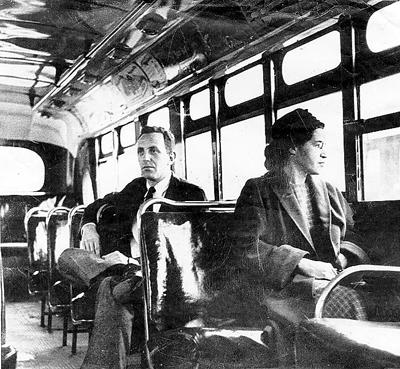
Rosa Parkes Passes away.


The woman who ignited the Civil Rights movement in te USA by refusing to stand up on the bus, passed away. I kind of missed this in the shuffle of 'things anti-terror'

Michael Jackson Moves To Bahrain


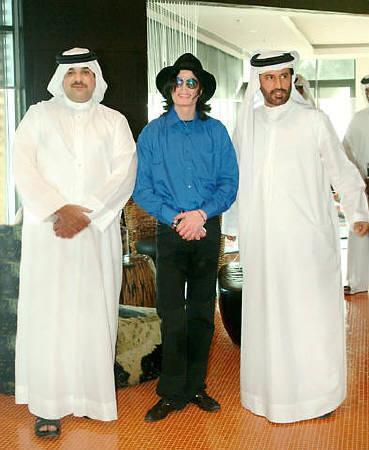
this caught my eye for a certain kind of cultural dissonance angle, so to speak
After a lengthy trial, it is now apparent that Michael Jackson is going to move to Bahrain. The only conclusion I can draw from this is that it is okay to kiddy-fiddle in Bahrain... Only kidding. Who knows what's going there? Just look at that photo, will you? "Me and my buddies in Pederasty!"

Ichiro Is Unhappy


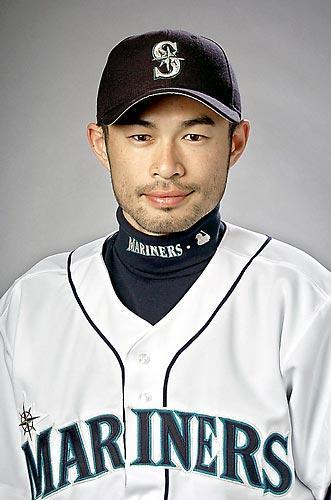
Ichiro Suzuki says he was very dissatisfied with the Mariners' performance this year. Well, I'd be too if I were him.
I've had this photo on my desktop for a few days now, so it seems this is a good a time as any to post it up.

Dead Shark


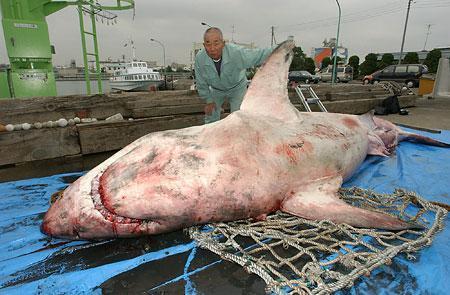
This Great White Shark corpse was washed up in a Japanese canal according to Yahoo. The thing was 4.8m long. That's one big beastie.

Blog Archive