Showing posts with label George Orwell. Show all posts

2010/06/28

Movie Doubles - 'Human Centipede' & 'Unthinkable'

The Horror, The Horror

I don't know what's more frightening; knowing you're going to be hit with something and being hit with it, or not suspecting what you're about to be hit with and being hit with it. That's exactly what we had here with these two films and really, moral repugnance of the subject matter in both these films is quite extraordinary.

I knew what was going to happen in 'Human Centipede' and when it hit, it was as gruesome as I had been told. But I was totally blindsided by just what 'Unthinkable' was going towards and in many ways I found the latter a lot more challenging to digest. What separates the two might be scale of the depravity in one and the consequences of the depravity in the other.

So here's the spoiler alert. I will have to talk about pretty specific things to make this movie double entry work. There's just no choice.

Both films are horrifying but one goes in a very transgressive personal way while the other commits to pushing the logic to the point of absolute horror. How do we in the civilised world countenance torture, let alone conceive of a methodology and a system for torture? Both these films shed immense light on just what it is that takes us to torture

The Sadean Vision

First, 'Human Centipede' is not as bad as the reviewers say it is. It actually has quite a bit of artistic ambition and pretension. In many ways it lives up to its ambitions as it goes inexorably to its central image, the human centipede. The human centipede is the surgical combining of 3 human beings, anus to mouth so that one long alimentary tract is created.

The logical ramification of this is that the second party is forced to eat the shit of the first party, and the third party is forced to digest the shit of the shit coming out of the first party through the second party. Why exactly a mad scientist wants to do this is not really well explained except for his one line, "I hate humans."

As gruesome as it is, there is a great deal of black humour in the conception. The director Tom Six is reported to have said that the film started a s a joke in a pub where he argued that child molesters should have their mouths sewn to the anus of fat truckies and forced to eat their shit. Well, this is that film all right in all its loving rendering.

It is a horror worthy of something straight out of the Marquis de Sade's collection. Indeed, even the story of how 2 tourists end up in the dungeon of despair (as Frank Zappa would have sung it) is similar to de Sade's 'Justine' where a girl wanders through the forest and wanders into an inn full of evil people. It's even in line with Hansel and Gretel, except the genders are reversed and the horror is coprophagy instead of cannibalism.

The Orwellian Vision

Compared to 'Human Centipede', 'Unthinkable' is flat out Orwellian. The film is about a desperate interrogation that entails significant amounts of torture. We don't quite know where the film is going until well into the second act when Samuel Jackson's character 'H' starts hoe-ing into Michael Sheen's Yusuf. This film is what happens in Room 101, extended out to its logical extreme.

There are a few caveats on this point. In 1984, the state's motive is gratuitous or so arcane as to be indecipherable. In 'Unthinkable' the state's motive is clear as daylight - it seeks to stop a nuclear catastrophe from taking place.  There is a big reason for the torture to take place because the guy is holding some vital information, It has to be extracted or millions will die. To that end of extracting the information, 'H' pulls out all stops from his bag of torture tricks trying to break Yusuf. Representing our relatively civilian and thus cozy point of view is Carrie-Anne Moss' Agent Helen Brodie.

Agent Brodie's moral dilemma is thus, should she be willing to commit acts of evil in order to  save a great many lives? She recoils in horror, but gradually her duty to the state forces her to tacitly condone H's methods. H, has long ago made ethical choices to affirm torture as his means of extracting information. In H's view, it is a moral weakness not to embrace the full ramification of committing to interrogation and thus torture. It's a joyless sadism in stark contrast to the joyous sadism of Dr. Heiter in 'Human Centipede'.

The Point Of Cruelty

It's never explained why the evil character Dr. Heiter came to hate humanity so much that he could commit such atrocities as they are portrayed in 'Human Centipede'. We can't even begin to guess at his disgust and thus it is hard to understand the whys and wherefores of 'Human Centipede'. Dr. Heiter is not seeking to squeeze out the truth or information from his victims like 'H'. He just likes the look of three people daisy-chained through surgery, which is to say his choice is an aesthetic one.

The aestheticisation of violence and cruelty is the hallmark of Marquis de Sade's work, which in turn explains things like Nazisms and the curious pleasure its meanest bastards took in devising concentration camps. Many people ask "how could the Nazis have done such terrible things?"  The answer was already written down by the Marquis who at least lived to see the French Revolution's high ideals devolve into the ritual of the  guillotine.

What then is the point of cruelty but pleasure?

At least, that is the point put forward by de Sade, and when you plug that through Freud, you can see how pleasure and cruelty can be conjoined and suddenly you have Nazism and concentration camps and Josef Fritzl the Dungeon Dad. Josef Fritzl for instance would not be such news if his crimes didn't push upon a bunch of our taboos but also our self-understanding about cruelty and pleasure.

The Torture Never Stops (The Uncle Frank Vision)


What if you then found joy in your work as a torturer? Or found that you were good at it, and that the state had great need of your services? The addition of duty makes for heady mix. Perhaps this is the big difference between say Fritzl's essentially domestic and private atrocity and the humanitarian catastrophe that was the Extermination Camps?

The character of 'H' is possibly the most honest representation of the ugliest face of American Imperialism. It is the face of all imperialism that has taken place in history. Here are the lyrics to Frank Zappa's 'The Torture Never Stops'. Check out this verse:
Flies all green 'n buzzin' in his dungeon of despair
An evil prince eats a steamin' pig in a chamber right near there
He eats the snouts 'n the trotters first
The loin's 'n the groin's is soon dispersed
His carvin' style is well rehearsed
He stands and shouts
All men be cursed
All men be cursed
All men be cursed
All men be cursed
And disagree, well no-one durst
He's the best of course of all the worst
Some wrong been done, he done it first

That is how the character of 'H''s handler works. 'H' is the very instrument of torture of the state.

Talk about misanthropy. 'H' has done so much torture in his life, he no longer feels any joy in it any more. He is jaded by his one talent, that used to give him so much joy. What he doesn't understand is that the duty allowed him to do all those tortures, but it is duty that slowly killed the joy in him. If it isn't perverse enough that our most important character is a Sadist, he is a sated Sadist.

Dr. Heiter can't restrain his joy as he yells, "Feed Her!" as the first person in the centipede defecates into the mouth of the second character. There's none of that with 'H', because he's just done it once too often. This is more frightening than Dr. Heiter, though that may be hard to believe. 'Human Centipede' is a black comedy next to the ethical direness of 'Unthinkable'.

The Utilitarian Ethos As Challenge

The direness of 'Unthinkable actually stems from a philosophical challenge that is being laid down to us. It's the re-imagining of the 'Star Trek: Wrath of Khan' and 'Star Trek: The Search for Spock' problematic of "Needs of the many outweigh the needs of the few" versus "The Needs of the few outweigh the needs of the many", but applied to the present day problem of terrorism.

Let's imagine for a moment we take the irrationalist Kirk position of the latter "needs of the few outweigh the needs of the many". Just how many of the 'many' are we willing to sacrifice or ignore before we come back to the rationalist "Needs of the many outweigh the needs of the few" position of Spock? In 'Unthinkable', it is made very clear that the rational view has to prevail when there is a nuclear threat to 3 cities - enough to compromise high principles of the society not to commit torture. Is this good? Morally speaking, absolutely not. But if you want to save those millions of people, then it becomes incumbent upon the interrogators to use any and all means necessary to squeeze the answer out of the one person.

And this is the horrible little secret of our society with all its wealth and privilege over other parts of the planet. It is exactly the truth we cannot handle, as per what Colonel Jessup says in 'A Few Good Men'. All our high principles and morals and ethics are luxuries upheld by the willingness of certain parties - the armed forces and black ops - to undertake unspeakable brutality in order to preserve the lifestyle of the many.  Every day we in the so-called civilised world are the beneficiaries and the many whose needs are outweighing the needs of the tortured.

If 'A Few Good Men' took us to the portal of understanding this problem, then 'Unthinkable marches right in and shows us how the house of horrors is furnished. Compared to that very real house of horror, the house of horrors created by Dr. Heiter is very tame. 'Unthinkable' grabs our moral sensibility by the scruff of the neck, and shoves its snout into the shit that comes from the hypocrisy we practice by preaching our moral sensibilities. For some this would be a surprise. If you've been reading politics for a while, you will know that this is indeed the be all and end all of our pretty civilisation: that we live and die by our hypocrisy. Mostly, we thrive happily, oblivious.

Coprophagy And Other Taboos

Any time a film is made that transgresses a taboo, the critics line up to condemn the film for getting made. For instance, 'Pink Flamingoes' by John Waters has Divine eating dog shit and caused a furor. Incest in 'Chinatown' also disturbed critics. 'Happiness' which featured a family man who happened to be a child rapist could not get rated. 'Salo' continues to be a problem for the Australian censor board.

It's interesting that 'Human Centipede' gets this critique from Roger Ebert:
I am required to award stars to movies I review. This time, I refuse to do it. The star rating system is unsuited to this film. Is the movie good? Is it bad? Does it matter? It is what it is and occupies a world where the stars don't shine.

It's funny that he thought it was that bad. It's not. Meanwhile there's hardly a review for 'Unthinkable'.

Between the two films, you'd think that 'Unthinkable' would be the film that might be the most threat to the decency of our society given what it says about who we are. What's perhaps even more disturbing is that critics and censor boards think that torture by the state is okay, but private torture is not.
2005/11/17

Spanish Civil War And The War In Iraq

Sartre Was Right In Not Going

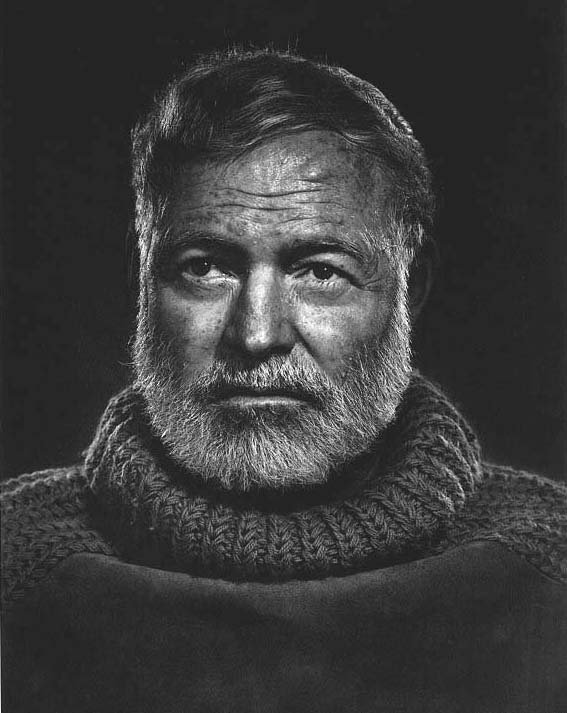
A few weeks ago, I wrote about Sartre and his novel 'The Age of Reason'. well, today I came across this marvelous article about the writers who did head out to fight in the Spanish Civil War: Ernest Hemmingway, John Dos Passos; and a cameo by George Orwell.


In late September, Hemingway wrote his editor at Scribners, Maxwell Perkins, “I hate to have missed the Spanish thing worse than anything in the world but have to have this book finished first.” The civil war, which most people assumed would last a few months, accommodated Hemingway’s writing schedule; it would go on for another two and a half years. He finished a draft of “To Have and Have Not” and immediately contracted to write a series of newspaper dispatches from the Madrid front. In short order, he also fell in love with Gellhorn, a beautiful and well-connected younger journalist who sailed into his marooned life on Key West just before she was scheduled to depart for Spain herself, on assignment for Collier’s. In Madrid, he offered literary advice and patronage; she educated him in Popular Front propaganda while accommodating him sexually to the extent, according to one biographer, of undergoing a widening procedure known as vaginoplasty.

John Dos Passos was travelling to Spain as well. He was Hemingway’s friend from their days in Paris, and he had met his wife through him. Hemingway, near the end of his life, portrayed Dos Passos in the nasty last pages of “A Moveable Feast” as a treacherous little “pilot fish” who had led Pauline and her rich friends into Hemingway’s youthful domestic bliss in the twenties and lured him into breaking up his first marriage. But Hemingway’s friendship with Dos Passos was already strained by the publication, in 1936, of “The Big Money,” the third novel of Dos Passos’s “U.S.A.” trilogy, to general acclaim and a Time cover story the week that fighting began in Spain. For a brief moment, Dos Passos was as big as the big man of American letters. It’s hard now to remember that, several generations ago, the trio of great novelists born around the turn of the century—Hemingway, Fitzgerald, Faulkner—was a quartet, with the fourth chair occupied by Dos Passos.
The rest of the article covers some interesting ground about how Hemmingway was basically an apolitical bastard (which we kind of knew) and how Dos Passos managed to lose his idealism in the confluence of events in Spain. There's also a couple of interesting paragraphs as to the real nature of the Spanish Republican Government that was so heavily romanticised (Remember: the main character of Casablanca, Rick Blaine, was supposed to have run arms shipment for the Republicans as his big credential to fighting for liberty). While the truth is predictably turgid, pedestrian and soul-destroying to some (I imagine), it dos liberate us from the layers of myth Hemmingway narcissistically heaped upon it and himself.

I know it's unfair to such a great article but I do want to quote this next big chunk because you may not have the time to read it all, and this bit is very important.


Intellectuals can hardly keep away from politics any more than other citizens, and probably less, especially in decades like the nineteen-thirties (or this one, for that matter). But, because they typically bring to it an unstable mix of abstraction and narcissism, their judgments tend to be absolute, when nothing in politics ever is. This is why a writer as devoted to the visible, concrete world as Hemingway could nonetheless stumble so badly during his time in Spain: he lacked a sense of politics. The writer forever in search of one true sentence ended up accepting a whole raft of lies. Dos Passos, for his part, lacked the inner toughness to recover from the blow his idealism was dealt by José Robles’s murder and Hemingway’s betrayal. Dos Passos, of course, never wrote another book that came anywhere near the brilliance of “U.S.A.” At the same time, as if his literary flame required the fuel of radical politics to keep burning, after Spain he began a rightward drift, which by the 1964 election had become so extreme that Edmund Wilson wrote him, “I feel obliged to tell you that your article about the San Francisco convention sounded like a teenager squealing over the Beatles. What on earth has happened to you? How can you take Goldwater seriously?” (Even during his Goldwater phase, though, Dos Passos never repudiated his belief in the Spanish Republican cause.) When war, politics, and writers mix, the results are seldom inspiring.
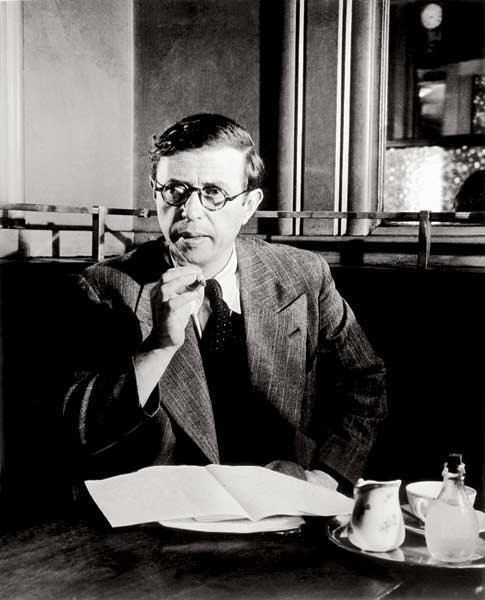
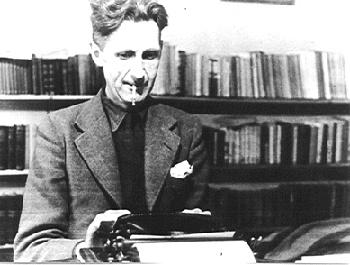
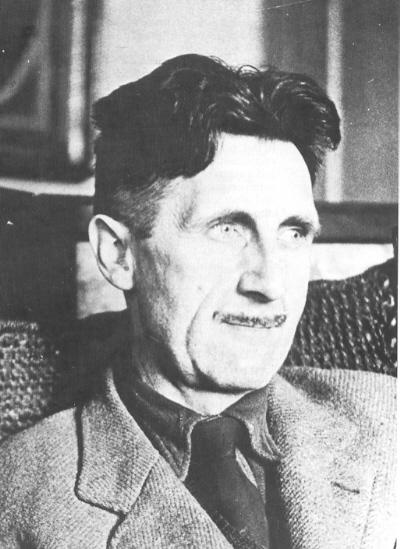
What can I say? At least the French existentialist J.P. Sartre stayed home and oversaw an abortion; while George Orwell wrote what he saw and gave us 'Animal Farm' and '1984'. All the same, in our time of a global 'War on Terror' it kind of comes around again for 'the intelligentzia' of today to wrestle and tangle with the cobweb of political deceits being dished about today, on this very day in the first decade of the Twentieth Century; and the bad news is, our generation's 'intelligentzia' seem hardly up to the task. Nobody is taking their gun and running on to the streets. Instead, they're probably writing their little whines on blogs like this one. Or perhaps in order to fight a media war, we need to fight it one weblog at a time.

Quick Shot
Donald Rumsfeld is in Australia and was greeted with this protest:
One demonstrator waved a placard saying: "9/11 was an inside job".

Australian Democrats SA leader Sandra Kanck said the rally was originally intended to protest at the proposed new terror laws.

"We would not need terror laws if our Prime Minister had not tied us to the coat tails of (US President) George W Bush and Donald Rumsfeld," she said.

"I have been delighted to hear much sedition here today and I have been delighted to see placards that are saying seditious things.

"But by Christmas this may not be allowed in our democracy."
That's really the best bit of the article, but I thought it was worth posting here.

The War in Iraq must rate highly as one of the more dumb and badly managed campaigns in history. Getting the decisive victory that dispatched the reign of Saddam Hussein was obviously the easy part; getting this democracy thing exported and firmly planted on Iraqi soil has turned out to bee a lot more challenging and the Coalition of the Willing have been found out to be very wanting in terms of persuading Iraq to take on board this thing called Democracy. After all, if this so-called institution could give rise to George W. Bush in the most powerful democratic nation on the planet, may be it is worth resisting. :) Oh no, that's going to be considered seditious by Christmas!

So much of our good democracy is indeed swayed by the 'pundits' and the 'spin doctors' who are in reality re-runs of sophists and demgogues who plagued Greek city-states from ancient times. How do we stop the demagogues in a democracy is going to be one of the biggest issues in our democracy going forwards. That and stopping the backsliding into Middle Age mores like the blurring of the church-state demarcation and this frequent use of torture.

2005/10/31

Age of Unreason


JP Sartre 100 Years' Anniversary
I didn't realise this but it is the 100th anniversary of the birth of Jean-Paul Sartre, he of the existenntialism fame.

In one of the most memorable sections in his novel 'Age of Reason', the main character 'Mathieu' is approached by a friend who has decided to cross the border from France to Spain and go fight fascism. The friend says words to the effect that the time is now to stop the onslaught of fascism. The main character, clearly representing the authorial voice says he won't join. His sense of reason leads him to not choose an ideology. So even though he can see the arguments for going to support a righteous cause in a neighbouring country fighting the Fascists of the world, his existentialist stance does not allow him to take onboard what he cannot conscienably support. Or maybe it was selfishness. It's hard to decipher from the book, but it is a key moment in the first third of the book.

At the end of the book that recounts 2 days of a very selfish philosopher, you get the feeling that maybe he was right not to go to Spain; and of course the main character declares he has reached the Age of Reason.
Anyway, in real life the Germans inevitably came marching in and the real life Sartre then went and fought in the French army, got captured, kind of talked his way out of Stalag 12D and then joined the French Resistance. So you could say that the lesson learnt by Sartre is that it really isn't your war until it hits your doorstep.

For some reason, I have been thinking about his book a lot today; in the sense that maybe, the war has hit my doorstep finally, and I have been prevaricating like Matheiu. That perhaps, it is time to join the resistance or whatever there is out there trying to fight this 'stupidwar'.
Yet what I'm thinking about all of this stuff to do with 'Anti-terror' laws, and 'Age of Reason' and fighting fascism, is also refracted through the awareness of what George Orwell (who actually went to fight the fascists) noted in Spain: that the Anarchists, the Socialists and the Communists were all gathered from around the world in High principle, but would quibble amongst themselves with arguments on the fine interpretations of what would be the right thing to do. Meanwhile the fascists knew exactly what they wanted to do, which was to lock up dissenting people in detention centres and wipe'em out. Ironically, the Federal Government of Australia is firmly behaving like a fascist nation (and has been for some time).

George Orwell went to Spain and learnt the tough lesson that the liberals of the world cannot stick together as well as the rightwing nutbars. Intelligence, education, good will, considered opinion, none of these things amount to a hill of beans in the face of fascism. Maybe we need the mindless jackboot to kick us over completely before we wake up and fight.
The funny thing is, not many people around me are boiling with the outrage. Maybe the war isn't here yet? It's so hard to tell, and that's what's been bothering me greatly in the last little while.

Yes there's a war going on; in fact several. One in Afghanistan, allegedly against the Taliban who allegedly backed Al Qaeda.
There's another going on in Iraq, though the powers that be are sort of in denial about the scope and range of this one.
There's also an alleged war against terror, by which we are being railroaded into giving up civil liberties.
And all the while folks in Sydney are worried about their mortgages on suburban houses and investment properties and interest rates and inflation. It's kind of sick, no?
So where is the war? On the television? On the internet? In the ideas that are being sidelined by official liars who have spun their names into 'Spin Doctors'?
Where exactly is the war? Is the war on our doorstep? Or is it still in a far away country? As citizens and thinkers, we must each weigh this up as Mathieu does in 'Age of Reason'. Maybe I'm going to just sit this one out and see where the shit all lands. After all, if I learnt nothing from the experiences of Sartre and Orwell, I'd be a moron of historic proportions.

2005/10/24

We Come In Piecemeal, Shoot-To-Kill


When I was at high school, we had to write essays saying how living in 1984 was totally unlike living in ''1984'.
The joke is that 2005 is more like '1984' than 1984 ever was. Talk about 'Back to the Future'

...And The Shotgun Sings The Song
The so-called 'shoot-to-kill' part of the proposed 'anti-terror' bill is proving to be a sticking point for the Premiers.
Here's another entry from the Margo Kingston Web Diary .
It's written by somebody who is more used to writing academic essays on law practices but it does bear investigating. It kicks off with this little bit here:
Judicial oversight in relation to anti-terrorism laws largely means the supervision by judges of the exercise of powers by police and security organisations. Such supervision is aimed at two purposes. First, it ensures that police and security organisations act within the limits set by the law. In doing so, judicial oversight ensures the rule of law. More than this, given that statutory law is the expression of democratically elected parliaments, judicial oversight also advances representative democracy. Secondly, judicial oversight may help to prevent police and security organisations from resorting too easily to their anti-terrorism powers. Many of these powers, like the proposed control and preventive detention orders, are unprecedented and hence, should be exercised only in the most extreme of circumstances. The prospect of having to justify the use of these powers to independent authority may mean that police and security organisations use their powers more sparingly.

While the role of judicial oversight is significant, it is crucial to note that it is also limited. Such oversight is largely directed at ensuring that the law is upheld. For instance, if the laws are drafted so as to allow detention without trial, judicial oversight, however effective, will not prevent such detention (subject to constitutional limitations). Effective judicial oversight, however, can ensure that such detention is carried out within statutory and constitutional limitations and used as a last resort.

It is also important to note that mere involvement of a judicial officer in the exercise of powers by police and security organisations does not give rise to effective judicial oversight. Other conditions must be present for such oversight. First, the judicial officer must be sufficiently senior, for instance, a member of the Federal Court or a State Supreme Court. S/he should not be a member of the Federal, State or Territory Magistracy. This ensures an appropriate degree of expertise and independence.

Further, effective judicial oversight requires that the judicial officers be involved prior to the grant of the powers. This is especially the case with the proposed preventive detention and control orders.[4] This is practically possible even in urgent situations. Courts can be convened by telephone and using electronic communications in emergency sittings, if required, provided that appropriate systems are put into place by working with Court Registries.
In other words, shoot-to-kill powers is a real problem for the law courts because it would presumably mean a judge is going to have to wear bad decisions that he/she wasn't party to when the police officer fires 5 rounds into the back of an innocent Brazilian's head, apropos to the fact. That would worry me too.


Merry Christmas Mr. Orwell
Meanwhile, Prime Minister John Howard is sayinig he expects the Anti-terror laws to go through by Christmas. Great.
But he has refused to speculate on whether the laws, which would allow people suspected of knowing someone involved in terrorism to be detained for 14 days without charge, would lead to the immediate arrest of 80 Australians known to have trained with terrorist organisations overseas.

"There's been an extraordinary amount of speculation about numbers of people, the identities of them, it is all speculation," Mr Howard told reporters.

"The law is yet to be passed by parliament - I hope it will be passed by parliament before Christmas. It would be in the national interest if it were.

"I have every reason to believe that (the powers) will be used appropriately, but it is not for me to speculate on numbers or timings or anything of that kind, it depends entirely on how the laws operate."
We're writing laws so we can put away about 80 people on a kind of assumption that they're possibly going to turn terrorist. Well, to paraphrase a Czech I once knew, "There are not such thing as 'terrorists', only 'potential-troublemakers'".
It also gets better:
Senator Brandis denied using the term.
But Mr Trad said it could land him in jail under the proposed laws.

"It's not just this house arrest issue," Mr Trad told the Seven Network.
"I mean, they're talking about provisions for disaffection, for criticising the prime minister, for criticising the government.

"I recall last year that Senator Brandis described the prime minister as a lying rodent. Under this legislation, he could be placed in prison for seven years."
Well, it seems we can call John Howard anything we like right up until Christmas. After that we're all terrorists up for questioning. Welcome to the dystopia born of despondency.
Just why aren't we fighting in the streets yet?

Blog Archive